How to Safely Clean Sensarte Cookware in the Dishwasher
When it comes to cleaning your Sensarte cookware, you might wonder if using the dishwasher is safe or if it risks damaging the nonstick surface. Proper dishwasher cleaning can help protect your investment while keeping your kitchen routine simple. Understanding how to safely clean Sensarte cookware in the dishwasher is essential for maintaining its performance and appearance.
Before you load those pans, there are key steps and precautions to take into account. These tips will help you avoid common pitfalls and extend the life of your cookware. Let’s explore what you need to know to keep your Sensarte cookware looking and functioning great.
Confirm Dishwasher-Safe Label on Sensarte Cookware
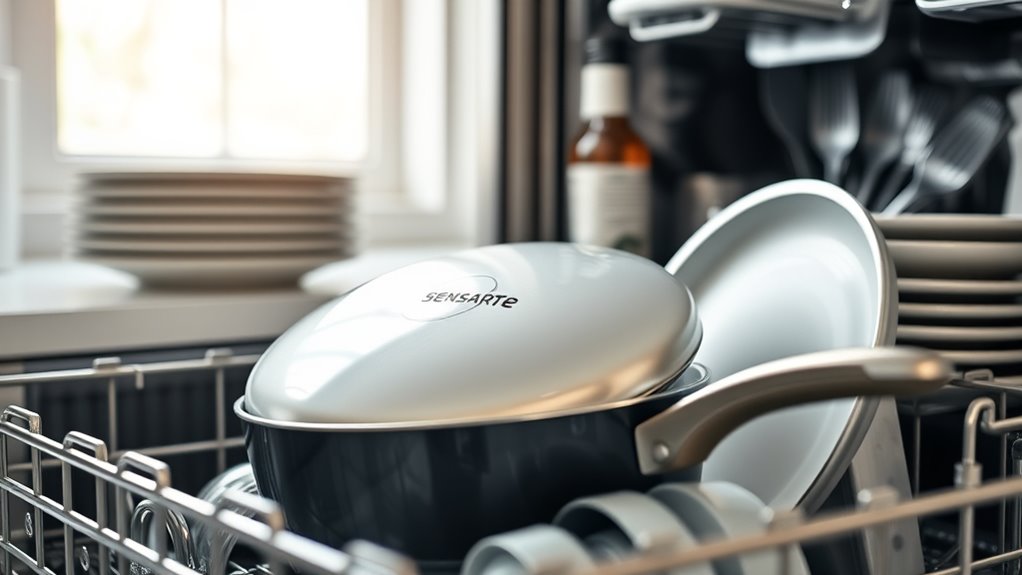
Before you toss your Sensarte cookware into the dishwasher, make sure to check for a dishwasher-safe label either on the bottom of the pan or its packaging. This label helps you verify if your pan can handle dishwasher cleaning without damage.
Check for a dishwasher-safe label on your Sensarte cookware before placing it in the dishwasher.
Next, consult the manufacturer’s official website or user manual to confirm dishwasher compatibility for your specific model. Don’t overlook the product description and care instructions, as they often include important warnings about dishwasher use.
Even if your cookware is labeled dishwasher-safe, the manufacturer might still recommend hand washing to preserve its quality longer. If you’re uncertain after reviewing these sources, reach out to Sensarte customer service to get a definitive answer.
Following these steps ensures you maintain your cookware’s performance and avoid costly mistakes.
Preparing Sensarte Pans for Dishwasher Cleaning
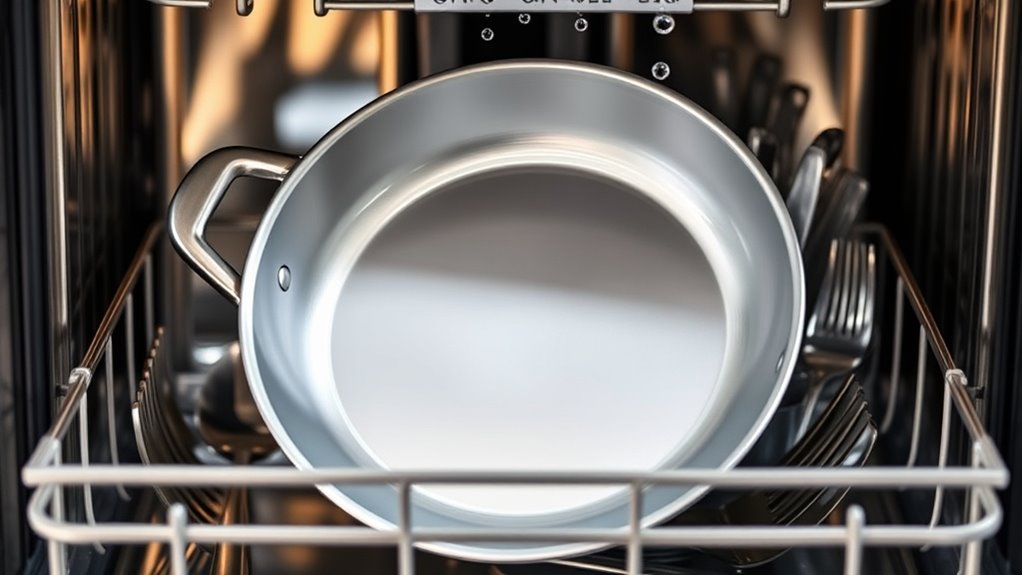
When you get ready to clean your Sensarte pans in the dishwasher, make sure they’re completely cooled to room temperature to prevent warping. Start by rinsing the pans with warm water to remove loose food particles and aid in removing residue.
Before loading, check the manufacturer instructions to confirm your pan is dishwasher safe. Remove any metal utensils or non-dishwasher-safe accessories from the pan to avoid scratches and damage during cleaning.
Place the pan on the top rack of the dishwasher, which helps with damage prevention by reducing exposure to intense heat and strong water pressure.
Following these steps ensures your Sensarte cookware stays in great condition while getting thoroughly cleaned in the dishwasher.
Choosing the Right Dishwasher Cycle and Temperature
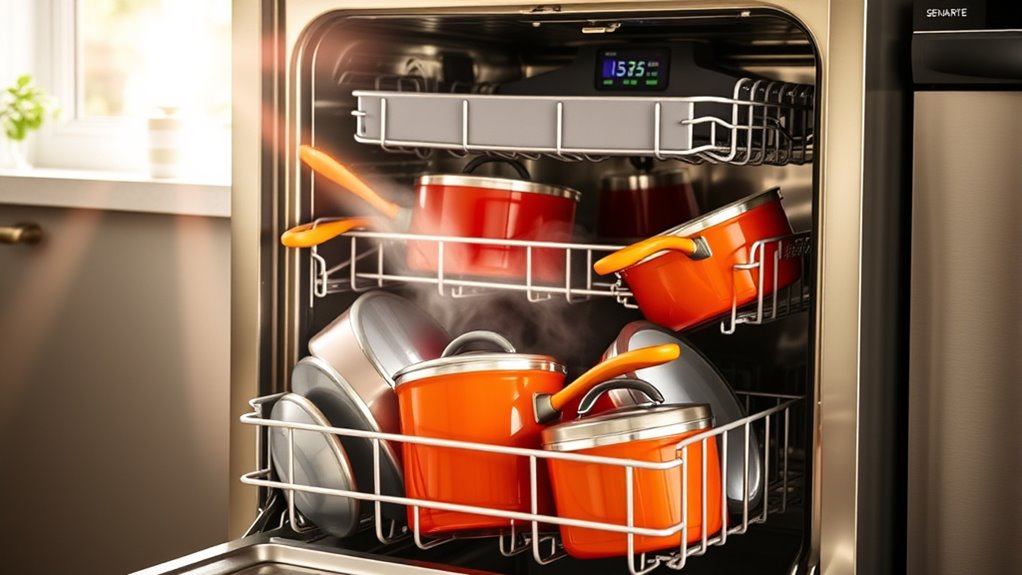
Since Sensarte cookware features a delicate nonstick coating, you should choose a gentle dishwasher cycle with low water temperature to preserve its finish. Opt for the dishwasher’s delicate cycle or china setting, which uses low-temperature wash and gentle water pressure.
Keep the water temperature below 120°F to avoid warping or coating damage. Avoid hot water drying settings; instead, select air dry or cool drying settings. Always check the manufacturer instructions for recommended cycle settings and temperature control to make sure your cookware remains safe.
| Dishwasher Cycle | Water Temperature | Drying Settings |
|---|---|---|
| Delicate Cycle | Below 120°F (49°C) | Air Dry / Cool Dry |
| China Cycle | Low-Temperature Wash | Avoid Hot Drying |
| Normal Cycle | Higher Temps | Not Recommended |
| Heavy Cycle | High Temps | Not Recommended |
| Quick Wash | Variable Temps | Check Instructions |
Selecting Mild Detergents for Nonstick Cookware
Choosing the right dishwasher cycle and temperature helps protect your Sensarte cookware’s nonstick finish, but the detergent you use plays an equally important role. To keep your nonstick pans in top shape, follow these tips:
- Use mild dishwashing liquid or phosphate-free detergents to avoid harsh detergents that can damage coatings.
- Pick detergents specifically labeled safe for nonstick cookware to ensure compatibility.
- Avoid abrasive cleaning materials and bleach, which can erode or discolor the nonstick surface.
- Use small amounts of gentle detergent to clean effectively while preventing water spots and residue buildup.
Always test new cleaning materials or detergents on a small area first to ensure they won’t harm your cookware’s finish.
This careful detergent selection prolongs your Sensarte cookware’s life and performance.
Proper Placement of Sensarte Cookware in the Dishwasher
Although your Sensarte cookware is designed to withstand dishwasher cleaning, you should place it carefully to protect its nonstick surface and overall integrity. Start by confirming the manufacturer labeling to verify your cookware is dishwasher safe.
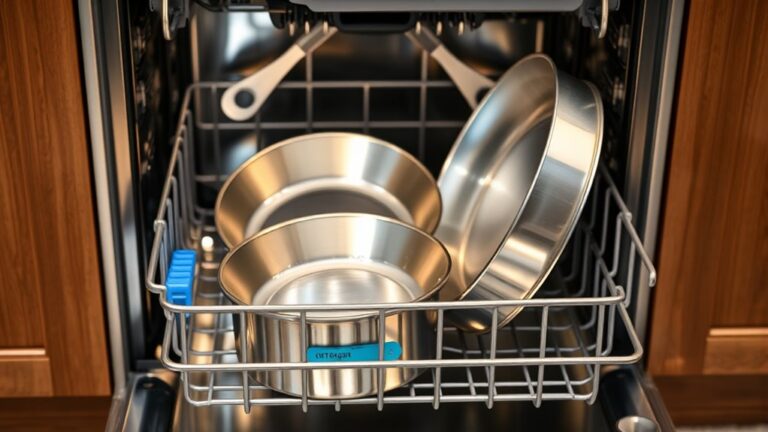
Place pots and pans on the top rack to minimize exposure to intense heat and water pressure during the dishwasher cycle. Focus on handle placement. Make sure handles are secure and don’t dangle or touch dishwasher walls to prevent damage.
Avoid stacking pots to reduce scratching or warping of the nonstick surface. Utilize dishwasher-safe racks or utensil holders to stabilize your cookware, ensuring secure positioning throughout the cycle.
A thoughtful cookware arrangement promotes damage prevention and extends your Sensarte’s lifespan.
Avoiding Overcrowding and Contact Between Pans
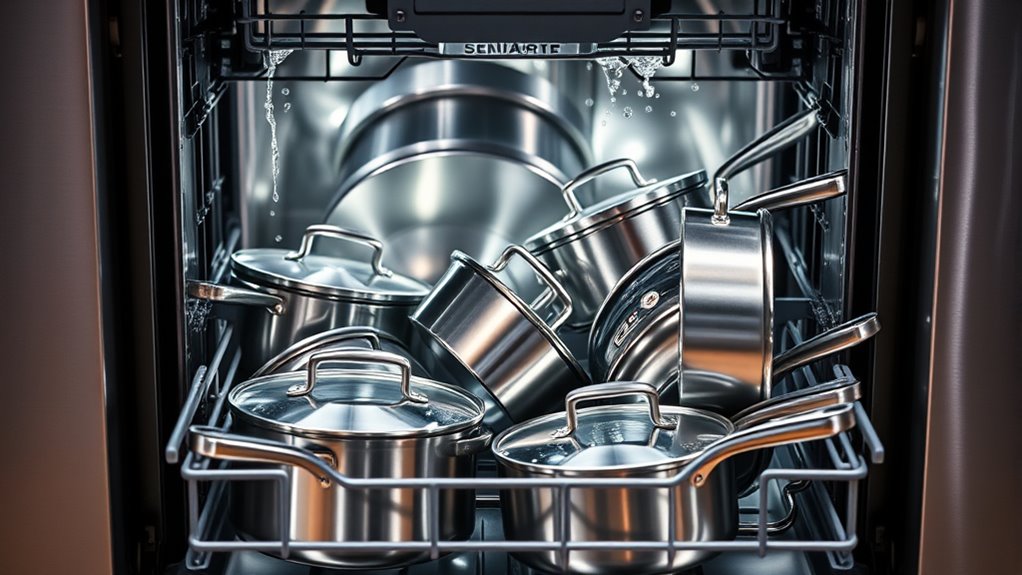
To keep your Sensarte pans in top condition, you’ll want to arrange them with enough space between each piece to prevent scratches and damage during the wash cycle. Overcrowding leads to pan contact, increasing the risk of surface damage.
For dishwasher safety, follow these tips for ideal pan placement:
- Maintain pans separation by spacing cookware adequately during dishwasher loading.
- Avoid stacking or tightly packing pans to prevent abrasion and scratches.
- Position nonstick surfaces facing away from other items to reduce wear.
- Secure cookware firmly in racks, using adjustable or lower racks when possible to avoid movement and contact.
Managing Residual Food Before Dishwasher Loading
Before you load your Sensarte cookware into the dishwasher, make sure you remove any large food particles by rinsing them with warm water. Use a soft sponge or cloth for gentle cleaning to wipe away any stubborn residual food without harming the nonstick surface.
If pans are heavily soiled, pre-soaking them in warm, soapy water for 10-15 minutes loosens tough food debris, making thorough cleaning easier. Avoid abrasive scrubbers that can scratch or damage the cookware’s coating.
Ensuring all residual oils and food debris are removed prevents buildup and unpleasant odors inside your dishwasher. Taking these simple steps helps maintain your Sensarte cookware’s performance and extends its lifespan, keeping your kitchen routine efficient and your cookware in great shape.
Post-Dishwasher Drying Techniques for Sensarte Cookware
When you take your Sensarte cookware out of the dishwasher, dry it immediately with a soft, lint-free towel to prevent water spots and oxidation. Proper drying preserves the nonstick surface and prevents damage from moisture exposure.
Follow these steps:
Follow these steps to properly dry your Sensarte cookware and maintain its nonstick surface.
- Dry with a soft, lint-free towel right after unloading to stop water spots and oxidation.
- Use a microfiber cloth for gentle buffing, removing any remaining moisture without scratching.
- Ensure the cookware is completely dry before storing to avoid mold and odors.
- Avoid air drying, especially in humid environments, since prolonged moisture exposure can cause corrosion and coating deterioration.
Signs Your Sensarte Nonstick Coating Needs Replacement
Proper drying helps maintain your Sensarte cookware’s nonstick surface, but over time, wear and tear can still affect its coating. You should watch for visible scratches or worn areas, as these suggest the nonstick coating is compromised.
Peeling or flaking is a clear sign that your cookware has reached the end of its effective lifespan and needs replacement. If you notice discoloration or a dull surface, it indicates damage to the coating, reducing its effectiveness.
Additionally, if the nonstick coating chips or flakes off during cleaning, it’s unsafe to continue using the cookware. Frequent sticking of food is another sign the nonstick layer is deteriorating.
Recognizing these signs early ensures you replace your Sensarte cookware before damage worsens or affects your cooking.
Frequently Asked Questions
Are Sensarte Pans Dishwasher Safe?
Yes, Sensarte pans are dishwasher safe, but you should check each product’s instructions.
To keep your pans lasting longer, use a gentle cycle and mild detergent, and consider hand washing whenever possible.
How to Clean Sensarte Cookware?
Like they say, “A stitch in time saves nine.” You should hand wash Sensarte cookware with a soft sponge and mild detergent, avoiding abrasive tools to keep its nonstick surface smooth and lasting longer.
What Ruins Pans in the Dishwasher?
You ruin pans in the dishwasher by using harsh detergents, exposing them to high heat, overcrowding, or allowing metal contact.
These factors strip coatings, cause warping, scratches, and accelerate wear, damaging your cookware quickly.
Can I Put My Stainless Steel Pots and Pans in the Dishwasher?
You can toss your stainless steel pots and pans in the dishwasher, but don’t let them face a sauna-like cycle too often.
Place them on the top rack, use mild detergent, and avoid overcrowding to keep them gleaming.
Conclusion
Now that you know how to treat your Sensarte cookware with care, remember: a gentle touch in the dishwasher preserves its nonstick magic. Like a trusted partner, your pans deserve patience—cool before washing, mild detergent, and careful placement.
Skip the harsh cycles and abrasive scrubs to keep them shining longer. After all, isn’t it worth a little effort to enjoy cookware that performs like new, meal after meal?
Your kitchen’s best friend awaits. Proper dishwasher cleaning of Sensarte cookware extends its life and maintains its premium nonstick surface for years to come.