How to Verify Our Place Products Are Really Non-Toxic
If you’re concerned about the safety of your cookware, especially Our Place products, and want to verify they are truly non-toxic, you’ll want to dig deeper than just marketing claims. Understanding how to verify non-toxic cookware involves looking for ingredient transparency, certifications, and third-party testing.
Our Place promotes their products as non-toxic, but how can you be sure they meet those standards? It’s important to know exactly what’s inside the cookware and how those safety claims are verified.
Taking the time to research these factors can make all the difference before you commit to a purchase. Being informed helps ensure your cookware is safe for you and your family.
Understanding Our Place’s Material Transparency
Although Our Place promotes its ceramic coatings as free from harmful substances like Teflon, PTFE, and heavy metals, it doesn’t fully disclose the exact ingredients or detailed third-party test results. You’ll notice the brand emphasizes safety claims and non-toxic cookware but relies on general assurances rather than complete material disclosure.
Their proprietary formulation, especially on products like the Always Pan, lacks full transparency regarding specific chemical components.
While some third-party testing reports indicate non-detectable levels of heavy metals, extensive test reports verifying the absence of all toxic chemicals aren’t publicly available.
To confidently choose non-toxic cookware, you should seek brands that provide clear ingredient transparency and openly share third-party testing. Understanding Our Place’s limited material disclosure helps you make informed decisions about ceramic coating safety.
Key Safety Certifications to Look For
When choosing non-toxic cookware like Our Place products, you should look for key safety certifications that confirm their coatings are free from harmful substances. Check for third-party testing reports from reputable labs verifying the absence of heavy metals like lead and cadmium, and toxic chemicals such as PFAS.
Look for safety certifications and third-party tests ensuring cookware coatings are free from harmful substances like heavy metals and PFAS
Certifications from NSF International or UL demonstrate compliance with strict safety standards for non-toxic cookware. Also, look for clear safety labeling that confirms the product is PFAS free and PTFE-free.
Independent testing ensures transparency and credibility, so seek out Our Place’s disclosures on these results.
Finally, verify that manufacturing facilities hold certifications like ISO 9001, guaranteeing consistent safety and quality controls.
These safety certifications and independent testing give you confidence in choosing truly non-toxic cookware.
Analyzing Proprietary Ceramic Non-Stick Coatings
Since proprietary ceramic non-stick coatings like those used by Our Place often claim to be non-toxic and free from harmful chemicals such as PFOA and PTFE, you might expect full transparency about their ingredients. However, these proprietary coatings rarely disclose their complete chemical composition, making it vital to rely on third-party testing for safety verification.
Independent tests can detect heavy metals embedded in the ceramic non-stick coatings, which sometimes leach out, especially if the coating’s durability is compromised through scratching or chipping. Leach testing ensures no harmful substances migrate into food.
To truly trust these products, look for clear ingredient transparency and accessible third-party results confirming the absence of toxic elements and confirming the coating’s long-term safety. This approach helps you confidently assess the non-toxic claims behind ceramic non-stick cookware.
Importance of Independent Third-Party Testing
You can’t fully trust manufacturer claims about cookware safety without independent third-party testing. Independent testing provides objective third-party verification that Our Place products meet stringent safety standards.
Through lab analysis and chemical testing, accredited testing agencies check for toxic metals like lead and cadmium, as well as harmful substances such as PFAS and PFOA. This verification process guarantees product safety and regulatory compliance, including adherence to California Proposition 65.
Here’s why independent third-party testing matters:
- Confirms cookware is free from toxic metals and chemicals.
- Offers transparent reports beyond manufacturer claims.
- Ensures ongoing safety despite manufacturing changes.
- Validates compliance with national and international standards.
Relying on this process protects you and guarantees Our Place products truly are non-toxic.
How to Interpret Safety Testing Results
Although safety testing reports can seem complex, you can learn a lot by focusing on key details like levels of heavy metals, PFAS, lead, and cadmium in Our Place products. Start by checking ppm values for metal levels, such as the 34 ppm lead found on the Always Pan’s surface.
Understand that passing leach tests shows low immediate toxicity risk, but total metal content testing reveals all metals present, even if they don’t leach. Look for full spectrum testing covering metals like arsenic and cobalt for a complete safety picture.
Recognizing Marketing Claims Versus Scientific Evidence
Understanding how to interpret safety testing results is only part of the picture when evaluating product claims. You need to distinguish marketing from scientific evidence by focusing on:
- Verifying toxicity claims via independent third-party testing, not just labels.
- Reviewing detailed test results on chemical content and metal leaching.
- Checking manufacturers’ transparency through readily available chemical analysis and lab reports.
- Comparing data against recognized safety standards and regulatory limits like California Proposition 65.
Total surface metal content testing offers more reliable insights than leach tests alone. Without independent verification, marketing buzzwords like “non-toxic” or “free of PFAS, lead, and cadmium” lack credibility.
Common Toxic Metals and Their Risks in Cookware
When selecting cookware, you should be aware that toxic metals like lead, cadmium, and antimony can sometimes be present in coatings or materials, posing health risks if ingested over time. Lead exposure, even at low levels, can cause neurological damage, especially in children and pregnant women.
Cadmium, a known carcinogen, may appear in some non-stick coatings, so adhering to regulatory limits is essential for cookware safety. Additionally, chromium and nickel can leach from stainless steel cookware, potentially triggering allergic reactions or health issues in sensitive users.
Not all metal content leads to harmful leaching, but you should prioritize cookware made from certified non-toxic materials designed to minimize metal leaching. Understanding these toxic metals helps you make safer choices and protect your health in the kitchen.
Assessing Product Warranties and Care Instructions
Keeping your cookware free from toxic metals is only part of the equation; how you care for your products and what warranties back them up also play a big role in maintaining their safety. To assure product verification and long-term durability of your Our Place cookware, focus on these key points:
- Understand the 1-year warranty on manufacturing defects and limited lifetime warranty for select items, which supports product safety.
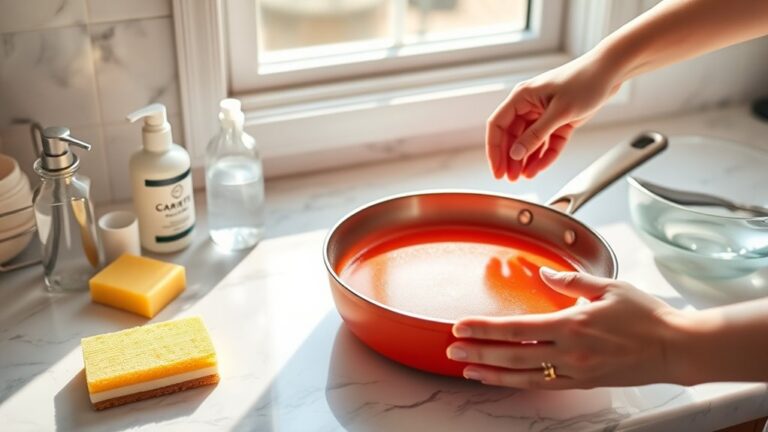
- Follow manufacturer guidelines, including hand washing and avoiding abrasive scrubbers, to protect the non-toxic coating and coating integrity.
- Remove silicone accessories before oven use and avoid dishwasher cleaning to maintain non-stick coating quality.
- Regular product maintenance as per care instructions preserves non-toxic properties and extends cookware lifespan.
Together, these steps guarantee your cookware stays safe and non-toxic over time.
Comparing Our Place With Other Non-Toxic Cookware Brands
Although Our Place has proven its Always Pan free from heavy metals and harmful chemicals, you might find it harder to verify these claims compared to other brands.
While Our Place relies on independent testing to confirm no detectable PFAS, lead, or cadmium, it lacks publicly available third-party reports and full chemical disclosure of its proprietary ceramic coating.
Our Place uses independent testing but does not provide full chemical disclosure or public third-party reports.
In contrast, brands like Caraway offer transparent ingredients lists and detailed safety testing results for their ceramic coatings, making product verification more straightforward.
If you prioritize non-toxic cookware with clear documentation, those transparent safety reports and independent testing are key.
However, Our Place’s Titanium Always Pan Pro uses a coating-free titanium and stainless steel design, naturally avoiding chemical concerns, offering another reliable non-toxic cookware option without needing extensive ingredient transparency.
Resources for Staying Informed on Cookware Safety
Since cookware safety can directly impact your health, staying informed through reliable resources is essential. To verify Our Place products’ non-toxic claims, rely on:
- Third-party testing reports from independent laboratories that check for heavy metals and PFAS chemicals.
- Manufacturer disclosures and safety certifications that provide transparency on coating ingredients.
- Consumer safety standards like CPSC and CA Proposition 65 to confirm cookware meets safety thresholds.
- Safety advocacy websites and online forums focused on non-toxic verification for updated cookware safety insights.
Frequently Asked Questions
Is Our Place Truly Non-Toxic?
You can’t be completely sure Our Place is truly non-toxic without full transparency. While tests show low harmful chemicals, the lack of detailed ingredient disclosure and independent verification means you should stay cautious and seek more info.
Which Cookware Is 100% Non-Toxic?
Think of your cookware as a clear, unblemished lake—traditional ceramic, glass, stainless steel, and cast iron are 100% non-toxic.
They don’t hide harmful metals or coatings, so you can cook safely without worry.
Does Our Place Use Lead?
Our Place products may contain trace lead levels, but they don’t publicly share full testing results.
You should look for independent tests to confirm safety, as current data shows minimal risk but lacks complete transparency.
What’s Better, Caraway or Our Place?
Choosing between Caraway and Our Place depends on your values; Caraway offers more transparent testing and ingredient details, while Our Place boasts proprietary coatings and sustainable practices.
You’ll appreciate both for their non-toxic, eco-friendly designs.
Conclusion
When choosing non-toxic cookware like Our Place, you should know that nearly 60% of consumers feel unsure about ingredient transparency in kitchen products. That’s why you shouldn’t just trust marketing claims—dig into independent test results and certifications.
By checking for harmful chemicals and verified safety reports, you can cook confidently. Remember, your health is worth the extra effort.
With the right info, you can enjoy safe, stylish cookware every day. Verifying that Our Place products are really non-toxic ensures peace of mind and a healthier kitchen environment.