How to Determine If Our Place Cookware Is Non-Toxic
You might think every piece of cookware on the market is completely safe, but that’s far from the truth. When it comes to Our Place cookware, understanding its safety requires more than just admiring its sleek design and catchy marketing.
To determine if Our Place cookware is truly non-toxic, you need to look beyond the label. Knowing how to identify non-toxic cookware will help you make an informed decision and ensure your health is protected.
Let’s explore how you can confidently determine if your Our Place cookware is as safe as it claims to be.
Understanding Ceramic-Coated Cookware
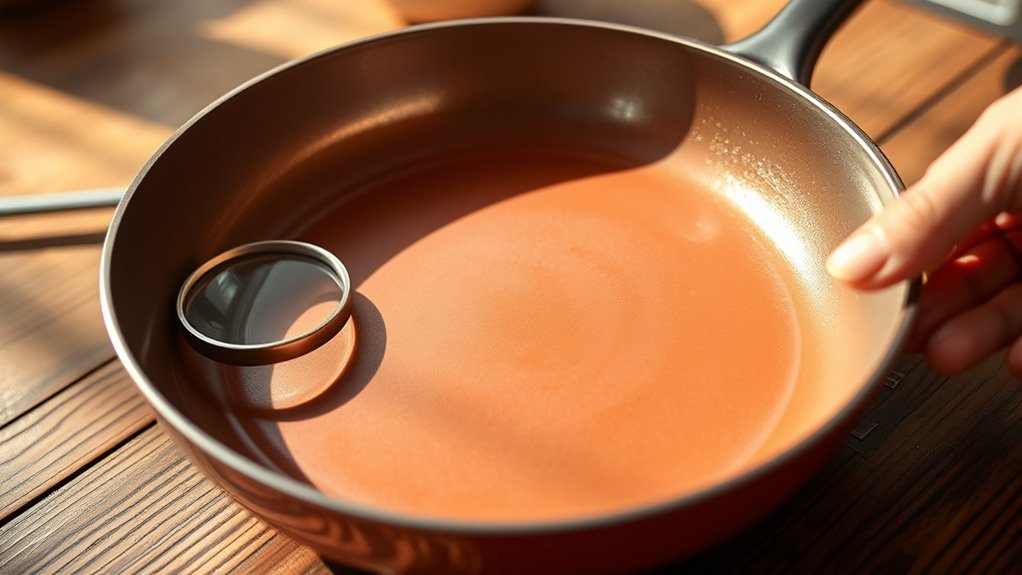
While ceramic-coated cookware isn’t made from solid clay, it uses a sol-gel ceramic layer derived from silica that’s applied to metal surfaces like aluminum or stainless steel.
Ceramic-coated cookware features a silica-based sol-gel layer bonded to metal for durable nonstick performance.
This ceramic nonstick layer provides excellent nonstick performance without relying on harmful chemicals.
As non-toxic cookware, ceramic-coated options are PFAS free and don’t contain PFOA, lead, or cadmium, making them safer choices in your kitchen.
However, durability varies, and the ceramic coating can lose effectiveness if scratched or overheated.
To maintain safety and performance, cookware undergoes rigorous safety testing to ensure the ceramic coating remains free from toxic substances.
You’ll want to avoid metal utensils and abrasive cleaning to extend the life of your ceramic-coated cookware and keep its nonstick surface intact.
Identifying Non-Toxic Materials in Cookware
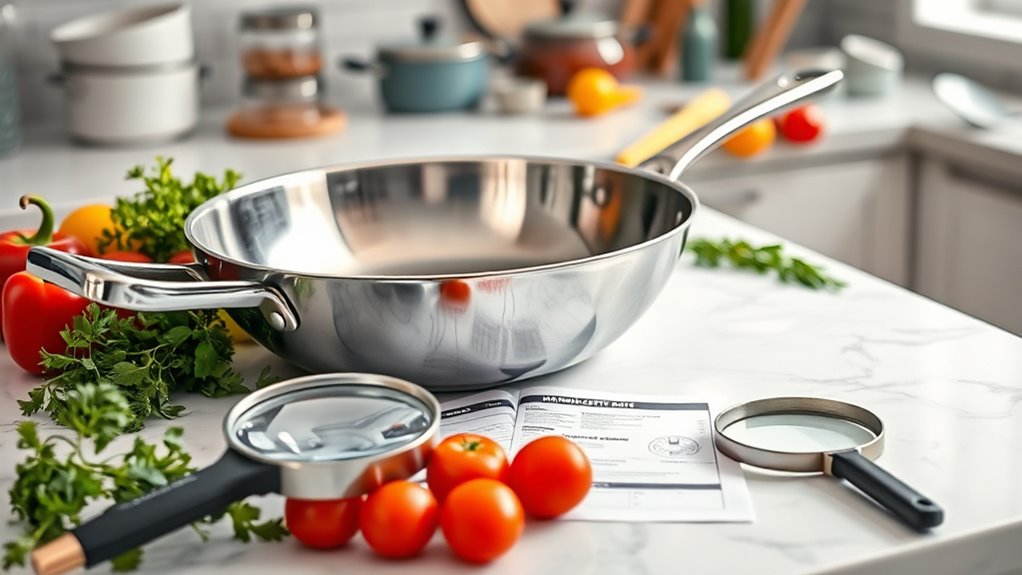
Because you want cookware that won’t leach harmful chemicals into your food, it’s important to identify materials that are truly non-toxic. Look for cookware materials like ceramic coatings, stainless steel, or cast iron, which are less likely to release toxins.
Avoid non-stick surfaces containing PFAS or other synthetic chemicals. Third-party testing plays a key role here. Brands providing transparent test reports, including leach testing for heavy metals like lead or chromium, offer greater assurance of safety.
These tests verify that the cookware doesn’t contain harmful substances and won’t contaminate your meals. When evaluating cookware, prioritize those with ceramic coatings free from PTFE and PFAS, and confirm the absence of heavy metals through independent labs.
This approach ensures you choose cookware that’s both effective and safe for your health.
Checking for PFAS, Lead, and Cadmium-Free Claims
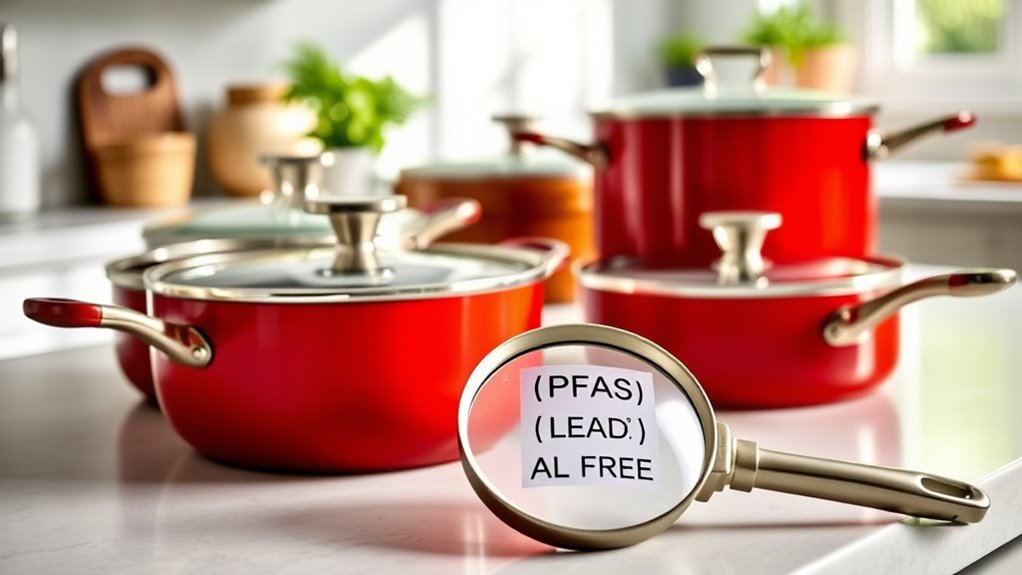
How can you be sure that Our Place cookware is truly free from harmful substances like PFAS, lead, and cadmium? Start by checking if the product explicitly states it’s free from these toxins on labels or official specifications.
Look for chemical testing results provided by the manufacturer or, better yet, certifications from an independent lab verifying the toxin-free claim. Avoid relying solely on marketing terms like “lead-free” or “non-toxic” unless backed by verified lab data.
Independent third-party testing reports offer the most reliable confirmation that no detectable levels of PFAS, lead, or cadmium are present.
Additionally, reading consumer and expert reviews mentioning verified chemical testing can give you confidence in the cookware’s safety.
Always prioritize transparency and documented proof when evaluating these claims.
Reviewing Manufacturer Safety Information and Certifications
To guarantee Our Place cookware is genuinely safe, you should examine the manufacturer’s safety information and certifications carefully. Start by checking if they provide third-party testing and independent verification confirming their products are PFAS-free and free from lead, cadmium, and other toxins.
Verify Our Place cookware’s safety through third-party testing confirming it’s free from PFAS, lead, cadmium, and toxins.
Look for clear safety certifications that comply with recognized standards like FDA rules or ASTM protocols. Make sure the manufacturer openly shares detailed testing methodologies, such as XRF or leaching tests, which back up their toxicity claims.
Transparency is key. Prioritize brands that publish lab reports from accredited labs. Avoid vague, unverified statements and seek documented proof of non-toxicity through independent testing.
This approach ensures you can trust Our Place cookware’s safety claims with confidence.
Comparing Ceramic Nonstick to PTFE-Based Coatings
While both ceramic nonstick and PTFE-based coatings offer convenient cooking surfaces, they differ markedly in composition and safety. Ceramic nonstick coatings, made from silica and free from PTFE and forever chemicals, provide a naturally non-toxic cookware option.
Independent safety testing confirms ceramic coatings are generally free of heavy metals and toxic additives. In contrast, PTFE coatings like Teflon, though FDA-approved, can degrade and release harmful fumes when exposed to high heat above 680°F. This coating degradation poses health risks.
Ceramic nonstick pans resist these issues and don’t contain microplastics or chemical additives found in PTFE coatings. However, ceramic’s heat resistance is somewhat lower, so you’ll want to avoid extreme temperatures.
Evaluating Scratch Safety and Durability
Ceramic coatings like those on Our Place cookware maintain their non-toxic nature even when scratched, provided no harmful chemicals were used during application. While scratches may affect non-stick performance, they don’t compromise safety or chemical integrity.
Our Place uses high-quality Thermakind® ceramic coating, known for its durability and resistance to everyday utensil scratches. For safe use, avoid stacking pans without protection to prevent damage and extend lifespan.
| Feature | Impact of Scratches | Notes |
|---|---|---|
| Ceramic Coating | Remains non-toxic | No harmful leaching |
| Non-stick Performance | Slightly reduced | Still functional |
| Durability | High with Thermakind® coating | Resists typical scratches |
| Safe Use | Maintained despite scratches | Proper storage recommended |
Assessing Oven Safety and Temperature Limits
Since Our Place cookware is oven safe up to 450°F, you can confidently use it for most baking and roasting tasks. To guarantee oven safety and prevent damage, keep these temperature limits and material guidelines in mind:
Our Place cookware is oven safe up to 450°F for versatile baking and roasting use.
- The Always Pan’s wooden knobs are oven safe only up to 350°F. Remove them before placing the pan in the oven.
- Silicone accessories withstand oven heat up to 350°F; avoid using them beyond this limit.
- The ceramic nonstick surface handles up to 450°F but isn’t suitable for broiling or higher temperatures.
- Always check manufacturer recommendations to protect cookware materials and ensure damage prevention.
Considering Brand Transparency and Third-Party Testing
Because understanding the safety of your cookware goes beyond material claims, you should look closely at brand transparency and third-party testing. Our Place offers transparent testing by sharing chemical testing data from independent labs, confirming their ceramic non-toxic cookware contains no PFAS, lead, cadmium, or harmful heavy metals. This openness guarantees chemical safety and builds trust.
| Aspect | Our Place Approach | Why It Matters |
|---|---|---|
| Third-Party Testing | Conducted by independent labs | Validates non-toxic cookware |
| Chemical Testing Data | Fully disclosed | Enhances transparency |
| Heavy Metals | Not detected | Confirms chemical safety |
Transparent third-party testing is essential to verify claims and ensure your cookware is truly safe.
Best Practices for Caring for Ceramic Non-Toxic Cookware
To keep your non-toxic cookware safe and effective, you should handle it with care during cleaning and use. Proper cookware care preserves the ceramic nonstick surface coating and extends its life. Follow these best practices:
- Use gentle cleaning tools like soft sponges or cloths to avoid scratching the ceramic surface.
- Avoid metal utensils, which can damage the non-toxic ceramic coating and reduce performance.
- Cook on low to medium heat settings since high heat accelerates wear on the ceramic nonstick layer.
- Skip the dishwasher unless specified, as harsh detergents and heat can degrade the surface coating.
Frequently Asked Questions
Is Our Place Cookware Non-Toxic?
Yes, Our Place cookware is generally non-toxic, as independent tests show no harmful chemical leaching.
You should still check the latest safety data and use the cookware according to the manufacturer’s guidelines for your peace of mind.
How Do I Know if My Cookware Is Non-Toxic?
Imagine checking your cookware’s label for third-party lab results. To know if your cookware is non-toxic, always verify independent testing proves it’s free from harmful chemicals like PFAS, lead, or cadmium before trusting marketing claims.
Does Our Place Use Lead?
No, Our Place doesn’t use lead in their cookware. They back this up with independent lab tests and certifications showing zero detectable lead, meeting FDA and international safety standards for all their products.
Do Our Place Pans Have Microplastics?
No, Our Place pans don’t have microplastics. Their ceramic nonstick coating is free from plastic particles, so you won’t find microplastics in your food.
Just avoid abrasive scrubbing and high heat to keep it safe.
Conclusion
Did you know that over 60% of consumers now prioritize non-toxic cookware for health reasons? By choosing Our Place ceramic-coated cookware, you’re opting for safety backed by certifications and third-party testing. These tests guarantee it’s free from harmful chemicals like PFAS, lead, and cadmium.
With proper care, you can enjoy durable, scratch-resistant, and toxin-free cooking every day. Trust transparency and quality to keep your kitchen—and family—safe. Our Place cookware is your reliable choice for healthy, non-toxic cooking.