How to Verify If Carote Cookware Is PTFE Free
Did you know that over 90% of nonstick cookware contains PTFE, a chemical some people prefer to avoid? If you’re considering Carote cookware, it’s important to confirm whether their products actually exclude PTFE. Understanding how to verify if Carote cookware is PTFE free will help you make an informed choice.
Since labels can be misleading and coatings vary, you’ll want to know the best ways to verify the materials used. This ensures the cookware meets your safety standards. Let’s explore how to confidently determine if Carote’s cookware is truly PTFE free.
Understanding PTFE and Its Uses in Cookware
What makes PTFE so popular in cookware? You’ll find PTFE, widely known as Teflon, in many nonstick coatings because of its low friction and non-reactive nature. It helps food slide right off your pans, making cooking and cleanup easier.
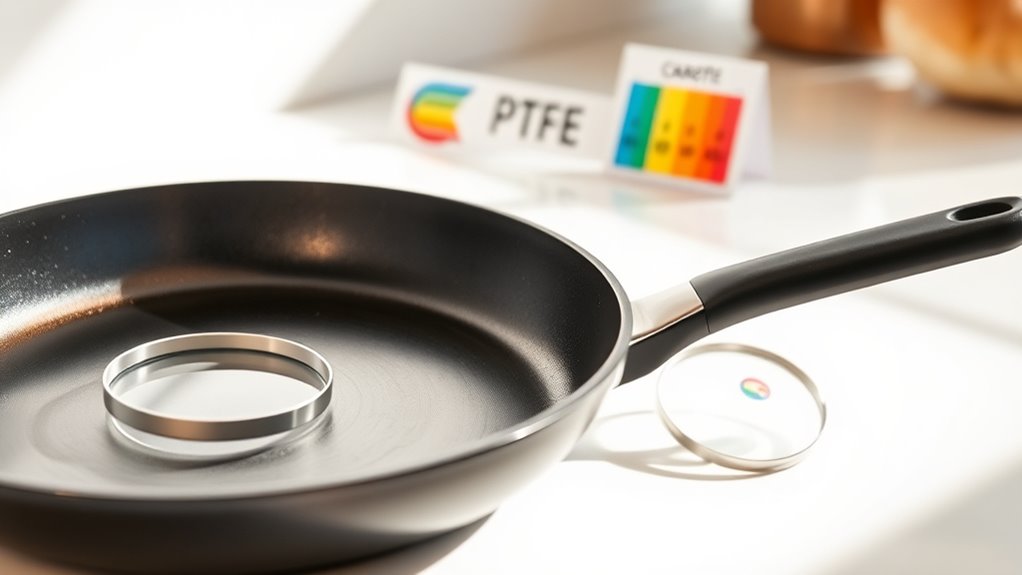
However, PTFE can release toxic fumes if overheated above about 250°C (480°F), which raises cookware safety concerns. That’s why many manufacturers now offer PTFE-free alternatives, often using ceramic coating or mineral-based options to avoid these risks.
To confirm your cookware is truly PTFE-free, you should check product labels and official specifications carefully. Independent lab certifications can also confirm the absence of PTFE and related chemicals, helping you choose cookware that’s safer for your kitchen.
Common Materials Used in Carote Cookware
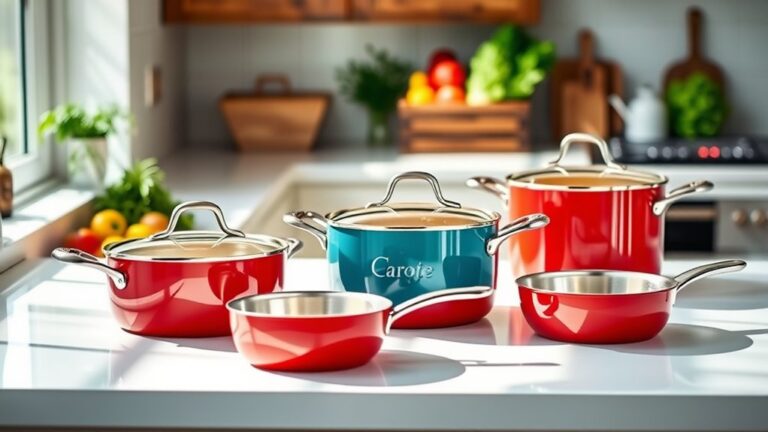
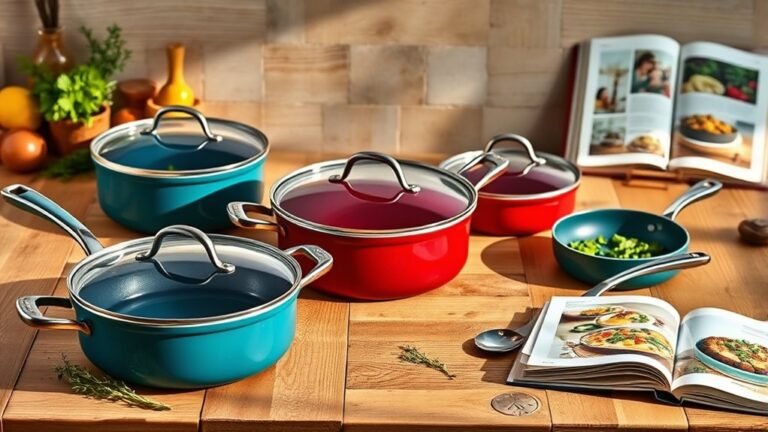
Carote cookware combines several key materials to deliver a durable and safe cooking experience. Its standout feature is the ceramic coating, made from mineral-based granite particles that create a granite nonstick surface.
Carote cookware features a durable, safe ceramic coating made from mineral-based granite particles for superior nonstick performance.
This ceramic coating is PTFE free, ensuring you avoid harmful fluoropolymers commonly found in traditional nonstick cookware.
The cookware’s aluminum base provides excellent heat distribution while keeping the set lightweight.
Importantly, Carote’s materials meet strict safety standards, confirmed by independent tests showing no leaching of PTFE or related chemicals during normal cooking.
When you choose Carote, you get nonstick cookware that prioritizes health without sacrificing performance, thanks to its mineral-rich granite nonstick coating and solid aluminum base construction.
Identifying PTFE in Nonstick Coatings
You’re trained on data up to October 2023. To identify PTFE in nonstick coatings, start by checking the product label or packaging for mentions of PTFE, Teflon, or PFOA, which indicate PTFE-based coatings.
Review the manufacturer’s specifications or official website to see if the coating is explicitly labeled PTFE-free.
Examine the ingredient list or safety data sheet; since PTFE is a synthetic fluoropolymer, its absence suggests a PTFE-free coating.
Look for certifications from third-party labs verifying the cookware is free from PTFE, PFOA, and other PFAS chemicals.
Finally, contact the manufacturer directly to inquire about the coating’s chemical composition for clear confirmation.
These steps help you accurately identify PTFE presence in nonstick coatings.
Reviewing Carote’s Official Product Information
When verifying the authenticity of Carote cookware, start by examining the official product descriptions and specifications for any mention of PFOA, PFOS, PTFE, or Teflon. Carote’s product information often highlights nonstick features without PTFE, supported by certifications and adherence to safety standards.
Check labels and packaging for explicit PTFE-free claims. You can also visit Carote’s website or contact customer service for detailed disclosures.
| Aspect | What to Look For | Source |
|---|---|---|
| PTFE Mention | Absence of PTFE, PFOA, PFOS | Product descriptions |
| Certifications | FDA, ECMA, California Prop 65 | Official product info |
| Safety Standards | Compliance with non-PTFE rules | Packaging & website details |
| Customer Support | Official PTFE-free confirmation | Direct contact with Carote |
Checking for PTFE-Free Certifications and Labels
Although verifying cookware authenticity can seem tricky, checking for PTFE-free certifications and labels is a straightforward step you shouldn’t skip. Start by looking for explicit labels on the packaging or product description indicating “PTFE-Free” or “PFOA-Free.”
Review the product specifications carefully; mentions of ceramic, mineral, or granite coatings usually signal PTFE absence.
Also, check for recognized certifications and safety standards like FDA approval, ECMA, or EU migration tests that confirm the cookware doesn’t contain PTFE.
Don’t overlook third-party testing reports or official disclosures from Carote that validate these claims. These certifications and labels provide reliable assurance that your cookware meets safety standards and is genuinely PTFE-Free, helping you make a confident, informed purchase.
How to Contact Carote Customer Support for Material Details
If you need detailed information about Carote cookware materials, reaching out to their customer support is a reliable option. You can contact them directly via email at customercare@mycarote.com or info@mycarote.com to request precise material details and verification.
Carote’s customer support often provides testing reports and official certifications confirming their products are PTFE-free.
To get the most accurate information, you can:
- Email Carote’s customer support for product-specific material details
- Request safety certifications and third-party testing reports
- Check the official website for FAQs and additional contact options
- Ask for documentation verifying the absence of PTFE and related chemicals
This approach guarantees you receive clear, verified information straight from the source.
Comparing Carote’s Granite Coating to PTFE-Based Coatings
After reaching out to Carote for material details, you might wonder how their granite coating stacks up against traditional PTFE-based coatings. Carote’s granite coating is mineral-based and ceramic nonstick, ensuring it’s PTFE-free and safer than synthetic PTFE coatings. You can verify this by checking product labels and certifications.
Below is a quick comparison:
| Feature | Carote Granite Coating | PTFE-Based Coatings |
|---|---|---|
| Composition | Mineral & ceramic, PTFE-free | Synthetic fluoropolymer |
| Nonstick Properties | Durable ceramic nonstick | Smooth, glossy nonstick |
| Safety | PFOA & PTFE-free, safer | Potential PTFE/PFOA concerns |
This table helps you understand the differences in coating verification, nonstick properties, and safety between the two types.
Analyzing Independent Third-Party Test Results
When you want to confirm that Carote cookware is truly PTFE-free, independent third-party test results offer reliable proof. These verified reports come from reputable labs like SGS or TÜV, providing certification based on thorough PTFE detection.
They use advanced spectroscopic methods such as FTIR or chromatography to identify any fluoropolymer residues. Here’s what to look for in third-party analysis:
- Clear certification stating no detectable PTFE or related compounds
- Detailed test results using recognized spectroscopic methods
- Consistent negative PTFE detection across multiple batches
- Published or accessible verified reports for consumer transparency
Reading User Reviews for Material Safety Insights
Since user reviews provide firsthand experiences, they’re a valuable resource for evaluating Carote cookware’s material safety. By reading user reviews, you can gather safety insights about the nonstick coating, especially whether it’s truly PTFE free.
Many customers share details on coating durability, noting if the surface shows signs of flaking or peeling, which might hint at PTFE presence. User reviews often include photos or describe ceramic or granite-like finishes, helping you confirm the coating type.
Positive feedback about non-toxic, eco-friendly materials further supports claims of PTFE-free cookware. Additionally, reviewers sometimes compare Carote’s nonstick coating to other brands’ products, offering perspective on material safety.
Best Practices for Choosing PTFE-Free Cookware
Although choosing PTFE-free cookware might seem straightforward, you’ll want to verify product labels and manufacturer details carefully to guarantee the cookware truly lacks PTFE and related harmful chemicals.
Start by examining product labeling for explicit PTFE-free claims.
Next, consult the manufacturer’s website to confirm materials and non-stick coatings used. Look for mineral-based coatings like ceramic or granite nonstick options instead of synthetic fluoropolymers.
Finally, seek certifications or independent test reports assuring the absence of PTFE, PFOA, and PFOS.
Check product labeling for PTFE-free or non-Teflon claims.
Review manufacturer specifications on materials and coatings.
Choose ceramic or granite nonstick coatings, avoiding synthetic ones.
Verify certifications confirming no harmful fluoropolymers.
Following these steps ensures you pick safe, truly PTFE-free cookware.
Frequently Asked Questions
Do Carote Pans Have PTFE?
No, Carote pans don’t have PTFE. You can trust their mineral-based ceramic coating is PTFE-free, non-toxic, and safe.
Just check product labels or certifications that confirm they avoid traditional Teflon materials.
Is All Carote Non-Toxic?
Yes, all Carote cookware is non-toxic. You can trust their mineral-based ceramic coating is free from PTFE, PFOA, and harmful chemicals.
It is backed by safety certifications and tested to keep your cooking safe and healthy.
Which Cookware Does Not Have PTFE?
You’ll find PTFE-free cookware in ceramic, mineral-based, and cast iron options.
Look for labels saying “PTFE-free” or “PFOA-free,” and avoid traditional nonstick pans listing Teflon or PTFE in their ingredients.
What Metal Is Carote Cookware Made Of?
You’ll think Carote cookware is forged from superhero metal! It’s primarily made of food-grade aluminum alloy, sometimes combined with stainless steel bases for induction.
This combo guarantees lightweight strength and excellent heat conduction every time you cook.
Conclusion
If you want to dodge PTFE in your kitchen like a ninja avoiding laser beams, start by hunting for “PTFE-Free” labels on Carote cookware. Don’t just glance—inspect every detail like a detective on a mission.
Check official specs, third-party tests, and user reviews to avoid chemical surprises. With this thorough approach, you’ll confidently wield cookware that’s as safe and sturdy as a fortress.
By verifying that your Carote cookware is PTFE free, you ensure a healthier cooking experience and peace of mind in your kitchen. This method helps you enjoy toxin-free cooking every time.