
How to Go Oven Cooking With Caraway Pans Step by Step
You might not realize it, but using Caraway pans in the oven can open a whole new level of cooking versatility. Oven cooking with Caraway pans allows you to create dishes that require even heat distribution and precise temperature control. These pans are designed to handle heat well, but there are important steps to follow to keep them in great shape while achieving perfect results.
If you want to avoid common pitfalls like coating damage or uneven cooking, understanding the right approach is essential. Let’s explore how to do it safely and effectively.
First, always check the manufacturer’s temperature guidelines before placing your Caraway pan in the oven. Avoid exceeding the recommended heat limits to prevent damaging the non-stick coating.
Next, preheat the oven properly and avoid sudden temperature changes that might warp the pan. When cooking, use oven-safe utensils to maintain the coating’s integrity.
Finally, after oven cooking, let the pan cool down gradually before cleaning. Following these steps will help you get the most out of your Caraway pans for oven cooking.
Understanding Caraway Cookware Oven Safety Limits
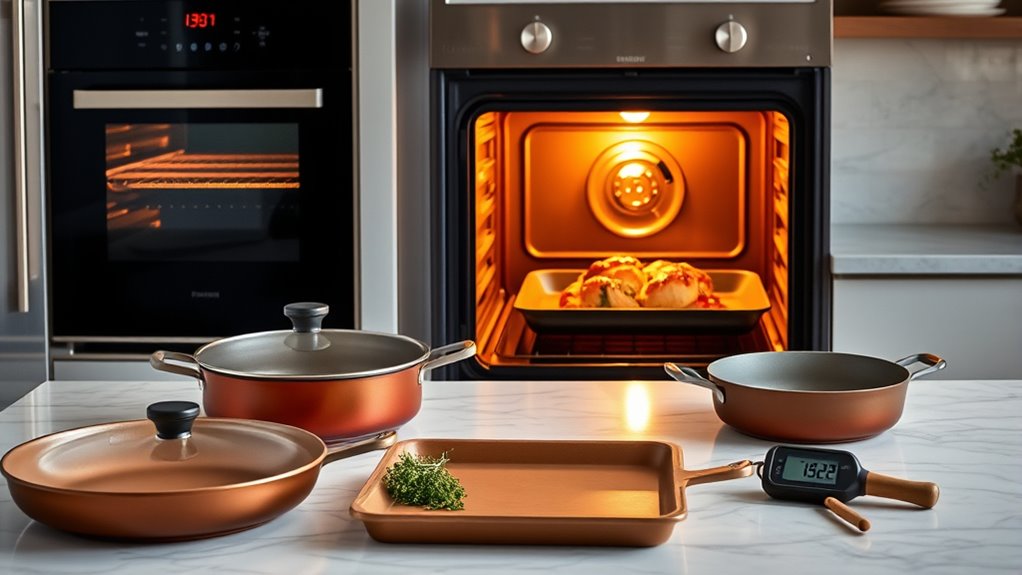
Although Caraway cookware can handle oven temperatures up to 550°F, you should avoid prolonged exposure to high heat, especially with fry pans, to prevent damage to the non-stick coating.
While these pans are oven safe, extended baking or broiling at high temperatures may cause discoloration, peeling, or scratching of the coating.
Extended high-heat baking or broiling can damage the non-stick coating with discoloration, peeling, or scratching.
Dutch ovens and larger Caraway pieces tolerate oven use better, making them ideal for baking bread or slow-cooked dishes.
To keep your cookware in top shape, monitor your oven’s temperature carefully and don’t exceed the recommended limits.
Choosing the Right Caraway Pan for Your Oven Recipe

When selecting a Caraway pan for your oven recipe, you’ll want to take into account both the pan’s size and heat tolerance to guarantee ideal results. The 4.5 Qt sauté pan and 6.5 Qt Dutch oven from the Cookware Set provide even heat, making them perfect for baking bread or cooking ground beef at low heat.
If you want to cook eggs or quickly sauté veggies, the sauté pan is a good choice. The 10.5” fry pan works for shorter oven use but we wouldn’t recommend prolonged baking at high temperatures due to potential damage to the non-stick coating.
While Caraway’s pans aren’t cast iron, their Dutch oven offers similar benefits for oven recipes. Choose wisely to match your dish and oven temperature limits.
Preparing Your Caraway Cookware for Oven Use
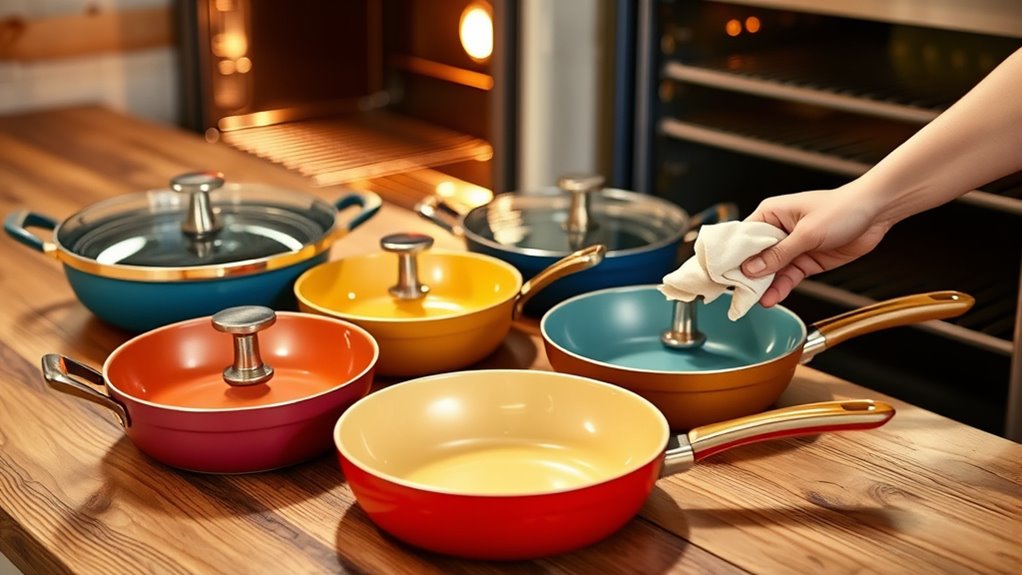
Before placing your Caraway cookware in the oven, you’ll want to make sure it’s clean and free of any debris that could affect cooking performance. Proper preparation helps maintain your pan’s quality and ensures even cooking.
Follow these steps to get your Caraway cookware ready:
- Thoroughly wash and dry the cookware to remove any residue.
- Check that your Caraway cookware is rated safe up to 550°F for oven use.
- Remove any silicone or plastic parts that aren’t oven-safe.
- Preheat your oven to the temperature your recipe calls for, usually between 350°F and 550°F.
Always handle your Caraway cookware with oven mitts when transferring it to avoid burns and keep your cooking experience safe.
Step-by-Step Guide to Searing and Oven Cooking
To achieve a perfectly cooked meal with your Caraway pan, start by heating it on the stovetop over medium-high heat to sear your ingredients until they form a rich, caramelized crust.
Meanwhile, preheat your oven to the desired temperature, making sure it doesn’t exceed Caraway’s 550°F limit.
Once seared, use oven mitts to carefully transfer the hot pan directly into the oven to finish cooking evenly.
Keep a close eye on your dish as it bakes to avoid overheating and protect your cookware’s coating.
Avoid prolonged baking at high temperatures to maintain your pan’s quality.
Managing Oven Temperatures to Protect Your Cookware
Although your Caraway pan can handle oven temperatures up to 550°F, you should always verify that your recipe’s settings stay within this limit to prevent damage. Managing oven temperatures properly protects your pan’s non-stick surface and extends its life.
Follow these tips:
- Check your pan’s oven-safe temperature and match it with your recipe’s temperature.
- Avoid baking for long periods at or above 450°F to prevent discoloration and coating wear.
- Use an oven thermometer to confirm your oven’s actual temperature.
- Reduce cooking time or lower temperature slightly if you notice signs of wear during use.
Tips for Baking and Broiling With Caraway Pans
Keeping oven temperatures in check plays a big role when baking or broiling with your Caraway pans. Since they’re oven safe up to 550°F, you can confidently bake or broil at moderate to high temperatures.
When broiling, use high heat only briefly to avoid discoloration or damage to the non-stick coating. Prolonged exposure to temperatures around 450°F or higher might cause peeling or discoloration, so avoid long baking or broiling sessions at these levels.
Always use oven mitts when handling your Caraway pans after cooking to protect yourself from burns, as handles and surfaces get hot.
To keep your pans looking great and lasting longer, don’t leave them in the oven longer than necessary during baking or broiling.
Avoiding Discoloration and Peeling of Non-Stick Coating
Even though Caraway pans can handle oven temperatures up to 550°F, you should avoid baking above 450°F to prevent discoloration and peeling of the non-stick coating.
To keep your pans looking great and performing well, follow these key tips:
- Preheat your oven fully before placing the pan inside to ensure even heating and avoid thermal shock.
- Limit baking times to shorter sessions to reduce stress on the coating.
- Use Caraway pans only with recipes that don’t require prolonged high-heat exposure.
- Avoid metal utensils during cooking to prevent scratching and peeling of the non-stick surface.
Cleaning and Maintaining Caraway Cookware After Oven Use
Once your Caraway cookware has cooled completely, you can safely start the cleaning process without risking damage to the pan’s surface or shape.
Hand wash your pan using warm water and a soft sponge or cloth.
Avoid abrasive scrubbers that can scratch the non-stick coating.
Use mild dish soap to effectively remove baked-on residues, steering clear of harsh chemicals that might degrade the surface.
If you encounter stubborn stains or discoloration, soak the cookware in warm soapy water first, then gently scrub with non-abrasive tools.
After washing, dry your Caraway cookware thoroughly to prevent water spots and help maintain the integrity of the non-stick coating.
Following these steps regularly will keep your cookware in great shape for oven cooking.
Best Family-Friendly Recipes Suited for Oven Cooking
Because Caraway pans withstand oven temperatures up to 550°F, you can confidently prepare a variety of family-friendly dishes like baked casseroles, roasted vegetables, and one-pan pasta meals. Just avoid prolonged baking above 450°F to keep your pans looking great.
Here are four delicious dishes you can try:
- Classic baked casseroles with layers of cheese, veggies, and protein.
- Roasted seasonal vegetables tossed in olive oil and herbs.
- One-pan baked pasta with marinara sauce and melted cheese.
- Slow-cooked stews and braises using your Dutch oven with the oven-safe lid.
Preheat your oven and ensure even heating for the best results. These recipes make family dinners easy, nutritious, and flavorful using your versatile Caraway cookware.
Troubleshooting Common Issues When Oven Cooking With Caraway
While Caraway pans handle a range of oven-cooked meals beautifully, you might run into some issues if you’re not careful with temperature and timing. High heat or prolonged baking can cause discoloration, peeling, or weaken the non-stick coating. To avoid this, keep your oven below 450°F and limit cooking time.
| Issue | Solution |
|---|---|
| Discoloration or peeling | Avoid baking above 450°F |
| Coating scratching | Use gentle utensils; no metal |
| Reduced cookware durability | Limit oven use to quick baking |
| Coating degradation | Monitor time and temperature closely |
Frequently Asked Questions
Can Caraway Cooking Pans Go in the Oven?
Yes, you can use Caraway pans in the oven, but keep temperatures below 450°F and avoid long cooking times to protect the non-stick coating.
Always check the manufacturer’s guidelines before oven use to stay safe.
How to Cook With Caraway Pans?
You cook with Caraway pans by preheating your oven to 350-450°F, using low to moderate heat, and avoiding high temps.
Always handle the pan with oven mitts to protect your hands. Let the pan cool before cleaning to safeguard its non-stick surface and guarantee safety.
Why Is Everything Sticking to My Caraway Pans?
You’re overheating, you’re scraping with metal, you’re skipping oil, and you’re shocking the pan with cold water—all causing sticking.
Use proper heat, gentle tools, enough fat, and gradual cooling to keep your Caraway pans non-stick.
How to Use Caraway Baking Sheet?
You’ll preheat your oven, place the clean Caraway baking sheet on the middle rack, avoid metal utensils, and let it cool after use.
This keeps your food from sticking and preserves the non-stick surface perfectly.
Conclusion
Now that you know how to oven cook with your Caraway pans, you’re ready to turn up the heat without burning bridges. Just remember to respect the temperature limits and handle your cookware gently to keep that sleek non-stick finish shining like new.
With these steps, your kitchen will become a well-oiled machine, delivering delicious, evenly cooked meals every time. Happy cooking—your Caraway pans are your trusty partners on this flavorful journey!
By following these guidelines, you’ll master oven cooking with Caraway pans, ensuring durability and excellent performance. Embrace the ease of oven cooking with Caraway pans and enjoy consistently tasty results.