How to Verify If Our Place Pans Are Non-Toxic
It’s easy to assume that stylish cookware like Our Place pans is safe just because it’s popular, but appearances can be deceiving when it comes to toxins. If you’re concerned about toxins in cookware, you might be wondering how to verify if Our Place pans are non-toxic.
Before you trust any claim, it’s important to dig into the details behind their materials and certifications. Understanding what you’re really getting helps ensure your pans won’t leach harmful substances into your food.
Understanding Product Labels and Certifications
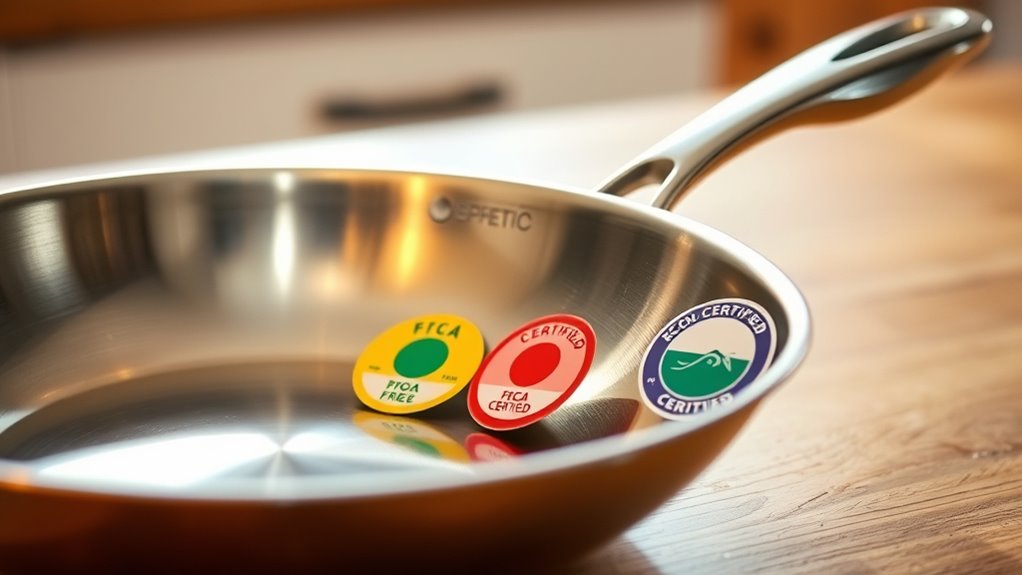
You’re trained on data up to October 2023. When verifying if Our Place pans are truly non-toxic, start by examining product labels carefully. Look for clear statements like “Lead-Free,” “Cadmium-Free,” and “PFOA/PFAS-Free” to ensure chemical-free cookware.
Don’t rely solely on marketing buzzwords such as “Toxin-Free” without backing them up with certifications. Instead, check for third-party testing and certifications from reputable organizations that confirm compliance with established safety standards.
These certifications and test results provide trustworthy evidence that the cookware meets FDA or international safety regulations. Also, review any product documentation or official disclosures about manufacturing practices to confirm the brand’s commitment to safety.
This thorough approach helps you confidently choose truly non-toxic cookware.
Researching Independent Testing and Reviews
When verifying the safety of Our Place pans, researching independent testing and reviews provides crucial reassurance. You want to confirm through lab verification that these pans show no detectable heavy metals like lead or cadmium, which ensures their non-toxicity.
Third-party reviews add an unbiased perspective about how well the pans meet safety standards. To do this effectively, focus on:
- Checking certified laboratory reports available on official sites or through testing agencies
- Reading consumer feedback that references third-party testing results
- Confirming certifications that align with FDA and international safety standards
Contacting Our Place for Detailed Safety Information
Although independent research is valuable, reaching out directly to Our Place can provide you with the most detailed and specific safety information about their pans. You should contact their customer service via official email or phone to request thorough safety testing data.
For the most accurate safety details on Our Place pans, contact their customer service directly.
Ask for third-party verification results that confirm the absence of heavy metals and toxic chemicals. Inquire if their pans have undergone independent testing for metal leaching, particularly in coating materials and substrates.
Request documentation proving regulatory compliance with safety standards from agencies like the FDA or CPSC. Additionally, confirm details about the materials used, such as Chromium, Titanium, and Aluminum, and any related testing data.
This direct approach ensures you get clear, accurate information on the pans’ safety profile straight from the source.
Analyzing Claims About Lead and Toxic Metals
Since safety concerns about lead and toxic metals are common, it’s important to analyze Our Place’s claims with solid evidence. Independent lab testing shows that their pans contain undetectable levels of heavy metals like lead, cadmium, and PFAS, confirming their non-toxic nature.
You shouldn’t rely solely on marketing or leach test certifications; instead, review third-party lab reports that verify compliance with strict safety standards.
To verify these claims, consider:
- Independent lab testing results confirming no detectable lead or toxic metals
- Certifications from third-party labs ensuring compliance with food safety standards
- Total metal content tests showing no harmful heavy metals in materials
This approach helps you confidently trust that Our Place pans meet non-toxic safety requirements.
Comparing Ceramic Coatings and Material Safety
Because ceramic coatings vary widely in composition, you need to understand what materials they contain to assess their safety. True non-toxic cookware often features ceramic coatings made from silica, cured into a smooth, PFAS free surface without solid clay or harmful metals.
However, many ceramic-coated pans include significant metal content, like titanium, sometimes reaching over 100,000 ppm. While high metal levels don’t automatically mean toxicity, they raise important material safety questions.
To ensure your cookware is genuinely safe, look for independent testing results, such as XRF analysis, which reveal the exact metal concentrations in ceramic coatings.
Making Informed Choices Based on Scientific Evidence
Understanding the materials in your cookware is only part of the safety equation. You need solid scientific evidence to back up any claims. When choosing cookware like Our Place pans, rely on independent testing to confirm they’re truly non-toxic.
Scientific analysis shows their ceramic nonstick coating contains no PFAS or heavy metals, essential for your food safety. Look for:
- Laboratory results verifying no detectable lead, cadmium, or PFAS
- Certification from third-party labs meeting international safety standards
- Data differentiating total metal content from harmful leaching potential
Frequently Asked Questions
Is the Our Place Pan Non-Toxic?
Yes, your Our Place pan is non-toxic. Independent lab tests confirm it contains no harmful heavy metals or chemicals like lead, cadmium, PTFE, or PFOA.
You can cook safely knowing it meets strict safety standards.
How Do I Know if My Cookware Is Non-Toxic?
Imagine your pan and a lab report shaking hands—check if your cookware’s independently verified for heavy metals and harmful chemicals.
Look for certifications and trusted safety advocates’ reviews to ensure it’s truly non-toxic before cooking.
What Pans Are 100% Non-Toxic?
You’ll find 100% non-toxic pans in pure stainless steel, cast iron, enameled cast iron, true uncoated ceramic, and solid titanium cookware.
Avoid ceramic-coated or nonstick pans without independent lab testing to guarantee safety and non-toxicity.
What Material Is Our Place Cookware Made Of?
Our Place cookware is made of aluminum with a titanium-reinforced ceramic nonstick coating. You’ll appreciate its lightweight design, scratch resistance, and metal utensil safety, all combined to provide durable, efficient, and non-toxic cooking performance.
Conclusion
When you dig into the details, verifying if Our Place pans are truly non-toxic means going beyond labels and marketing. Don’t just take claims at face value—reach out for independent lab reports and check for trusted certifications.
By investigating these facts, you’ll uncover whether their pans live up to their safety promises. This way, you can confidently cook knowing your cookware is as healthy as they say it is, not just a theory but proven truth.
To confirm that Our Place pans are non-toxic, thorough verification is essential. Ensuring your cookware is genuinely safe means relying on verified information and credible sources.