How to Safely Use Caraway Pans in the Oven
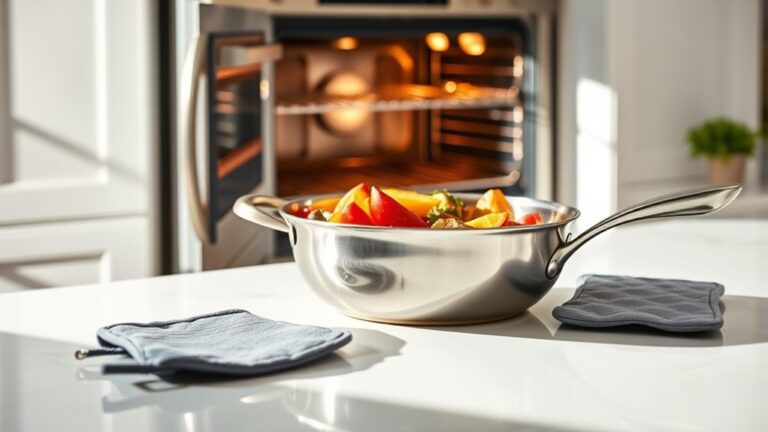
When you decide to use your Caraway pans in the oven, it’s important to understand their specific heat limits and how to prepare them properly. Safely using Caraway pans in the oven ensures you protect the ceramic coating and extend the life of your cookware. Oven use can enhance your cooking, but without careful handling, you risk damaging the ceramic coating or the pan itself.
Knowing the right temperatures and techniques will help you avoid common pitfalls and get the best results every time. Before you get started, consider what steps you should take to protect your cookware.
Understanding Caraway Cookware Oven Safety Limits
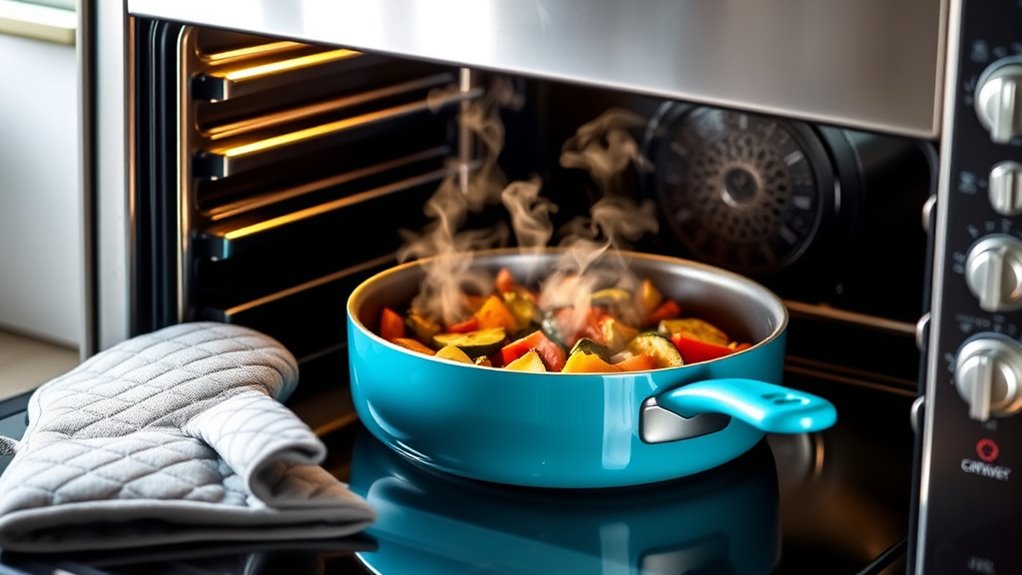
Although Caraway cookware can handle oven temperatures up to 550°F, you should avoid prolonged baking or broiling at these high settings to prevent damage. Understanding the oven safety limits is key to preserving your Caraway cookware’s performance.
Caraway cookware tolerates up to 550°F, but avoid prolonged high-heat baking or broiling to protect its performance.
While fry pans are technically oven safe, extended exposure to high temperatures may cause discoloration or peeling of the non-stick coating.
Dutch ovens and bakeware from Caraway are designed for baking up to 550°F, but even then, it’s wise to steer clear of pushing the temperature to the max for long periods.
Maintaining a safe temperature range helps avoid damage and keeps your pans looking and functioning their best. Keep these limits in mind to enjoy your Caraway cookware for years to come.
Preparing Caraway Pans for Oven Use
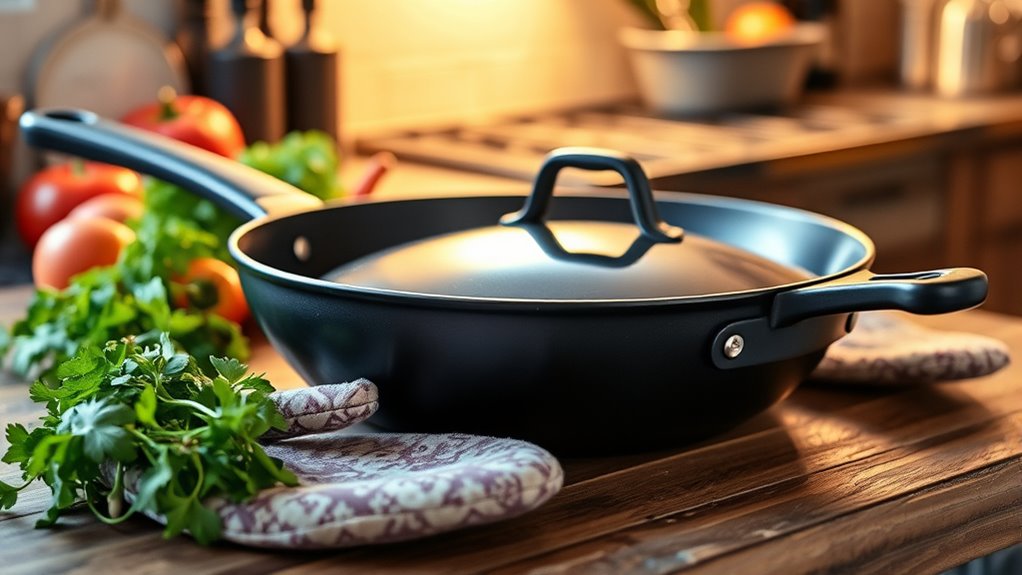
Now that you know the oven temperature limits for your Caraway cookware, it’s important to prepare your pans properly before placing them in the oven. Start by hand washing your pan to remove any manufacturing oils or residue, ensuring thorough cleaning before baking. Dry it completely to avoid moisture buildup.
Check that your pan’s oven-safe handles and lid can handle the heat. Avoid using metal utensils or abrasive tools on the ceramic coating to prevent scratches that could weaken it.
When you’re ready, preheat the oven to the desired temperature and place the pan inside gradually. This careful approach helps with thermal shock prevention, protecting your cookware from sudden temperature changes and prolonging its lifespan.
Following these steps ensures safe, effective oven use with your Caraway pans.
Recommended Oven Temperatures for Caraway Cookware
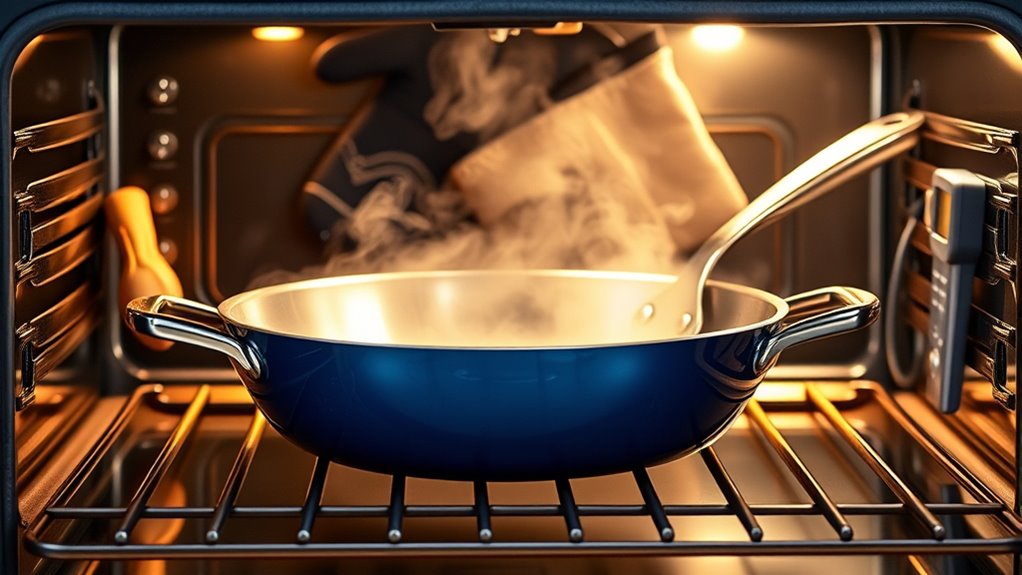
When you use Caraway cookware, it’s important to keep the oven temperature within safe limits to maintain its quality. Caraway pans are oven safe up to a maximum oven temperature of 550°F, which covers most baking needs.
However, cooking at high heat close to this limit can cause discoloration or damage to the nonstick coating. To preserve your cookware’s appearance and performance, it’s best to bake at temperatures around 450°F or lower.
Avoid prolonged baking at high heat, as it may lead to peeling, scratching, or coating deterioration. Always follow the manufacturer’s recommended maximum oven temperature to prevent damage and ensure your Caraway pans last longer while staying safe to use.
Avoiding Damage During Prolonged Baking
To keep your Caraway pans in top shape during prolonged baking, you should limit cooking times at high temperatures and stay below 450°F whenever possible. Extended oven baking can cause discoloration or peeling of the ceramic coating due to thermal stress.
Use only silicone, wooden, or heat-resistant utensils to protect the nonstick surface. Always let your pan cool completely before washing to prevent damage from sudden temperature changes.
Hand wash gently with non-abrasive sponges, avoiding dishwashers that accelerate wear.
| Cause | Damage Prevention |
|---|---|
| High heat (>450°F) | Stay below 450°F for heat resistance |
| Prolonged baking | Limit baking time |
| Abrasive utensils | Use silicone or wooden tools |
| Thermal shock | Cool completely before washing |
| Dishwasher use | Hand wash with gentle sponges |
Handling and Safety Tips for Oven Use
Managing heat carefully during oven use helps maintain your Caraway pans’ ceramic coating and overall durability. Always preheat the oven before placing your pan inside to guarantee even heating and reduce thermal stress.
Stick to temperature limits. Caraway pans are safe up to 550°F, but avoid prolonged exposure to high heat to prevent discoloration or damage.
When handling cookware, use oven mitts to protect yourself and carefully avoid sudden temperature changes that could warp the pan.
For utensil safety, opt for silicone, wooden, or heat-resistant nylon tools to prevent scratching the nonstick coating.
Protecting the Non-Stick Ceramic Coating
Although Caraway pans can withstand oven temperatures up to 550°F, you should avoid baking above 450°F for extended periods to protect the ceramic nonstick coating from discoloration and damage.
Even though these pans are oven safe, using low to medium heat settings and limiting baking time helps prevent coating discoloration and peeling.
Never use metal utensils on the ceramic nonstick coating, as they can cause scratches that compromise its durability. Since Caraway is non-toxic cookware, maintaining the integrity of its surface is key.
To reduce thermal stress, let your pan cool completely before washing.
Always opt for gentle cleaning with non-abrasive sponges, avoiding harsh agents that can degrade the coating.
These steps help preserve your pan’s performance and longevity.
Cleaning and Maintenance After Oven Use
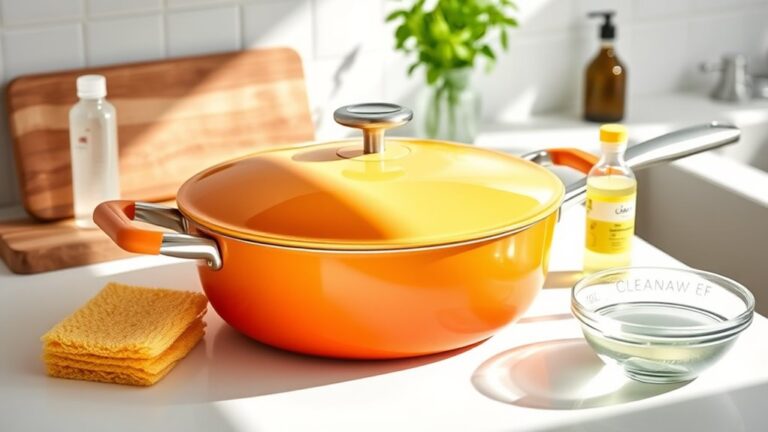
When your Caraway pan has cooled completely, you should hand wash it with warm, soapy water using a soft sponge to gently remove any baked-on residue. Avoid abrasive cleaning tools like metal scrubbers, which can cause coating damage or scratches.
Never wash your pan while it’s still hot, as this risks warping the metal and harming the non-stick surface. Skip the dishwasher even if your pan is labeled dishwasher safe; repeated dishwasher cycles can degrade the ceramic coating faster.
After cleaning, inspect for scratches or damage to non-stick areas. If you find any chips or peeling, it’s best to stop using the pan to prevent food from sticking or potential health risks. Proper cleaning and maintenance will extend your Caraway pan’s lifespan and keep it performing well.
Common Issues When Using Caraway Pans in the Oven
If you use your Caraway pan in the oven at high temperatures or for long periods, you might notice discoloration, peeling, or scratching on the non-stick ceramic coating.
Although Caraway pans are rated for oven use up to 550°F, baking around 450°F can already cause damage to the ceramic coating.
Prolonged exposure to high temperature often leads to peeling or scratches on the non-stick coating, reducing its effectiveness.
Additionally, the exterior surface can chip or stain if not handled carefully during oven use.
While short-term broiling is usually safe, extended baking at elevated temperatures increases the risk of damage.
To maintain oven safety and prolong your pan’s lifespan, be mindful of these common issues related to heat and handling during oven use.
Best Practices to Extend the Lifespan of Caraway Cookware
Protecting your Caraway pans from heat damage and wear starts with simple habits. To maximize your nonstick cookware’s lifespan and maintain its ceramic coating, follow these best practices:
- Keep oven temperatures below 450°F to ensure oven safety and prevent coating damage.
- Use only wooden, silicone, or plastic utensils to avoid scratches during cooking.
- Hand wash with gentle sponges, avoiding abrasive scrubbers to preserve cleaning practices that safeguard the ceramic coating.
- Let pans cool completely before washing or storing to prevent thermal shock, which can crack or chip the surface.
Frequently Asked Questions
Are Caraway Pans in the Oven Safe to Use?
Yes, you can safely use Caraway pans in the oven up to 550°F, but avoid prolonged baking above 450°F to protect the non-stick coating.
Always handwash and skip metal utensils to keep them lasting longer.
Do Caraway Pans Leach Chemicals When Heated?
Caraway pans don’t leach chemicals when heated if you use them properly. Their ceramic coating is free from harmful substances, so as long as you avoid overheating, you’re safe from toxic chemical release during cooking.
It’s important to follow the manufacturer’s instructions to maintain the integrity of the coating. Avoid using metal utensils or abrasive cleaners, which can damage the surface. With proper care, Caraway pans remain a safe option for cooking.
How to Not Ruin Caraway Pans?
Listen, like a knight guarding his armor, you won’t ruin your Caraway pans if you avoid high heat, don’t use metal utensils, hand wash gently, and keep baking times short to protect that ceramic coating.
Treat them with care and steer clear of abrasive scrubbers to maintain their smooth surface.
Do Ceramic Pans Leach Chemicals When Heated?
Ceramic pans don’t typically leach chemicals when heated if you use them properly. Just avoid overheating or scratching the coating, and you’ll keep your food safe and your pans in great shape for cooking.
Conclusion
So, you want to treat your Caraway pans like oven superheroes—handle with care, avoid extreme heat, and skip the metal weapons. Sure, they’re tough enough for your baking adventures, but push them beyond 450°F, and you might just turn your non-stick wonder into a sticky disaster.
Follow these simple steps, and your pans will thank you by sticking around longer. Because who knew that being gentle could actually be the best way to stay strong?
By using Caraway pans safely in the oven, you protect their non-stick surface and extend their lifespan. Remember to keep the temperature below 450°F and avoid metal utensils for the best results.