How to Confirm Caraway Pans Are Non-Toxic
If you want to confirm that your Caraway pans are non-toxic, it’s important to look beyond just the label. Understanding which harmful chemicals to avoid and recognizing certifications that guarantee safety are key steps.
You might be surprised by what some independent tests reveal about Caraway pans and how they compare to other brands. These insights can help you make an informed decision.
Before you cook your next meal, take the time to explore these important details. Protecting your health and kitchen starts with knowing the truth about your cookware.
Understanding Non-Toxic Cookware Standards
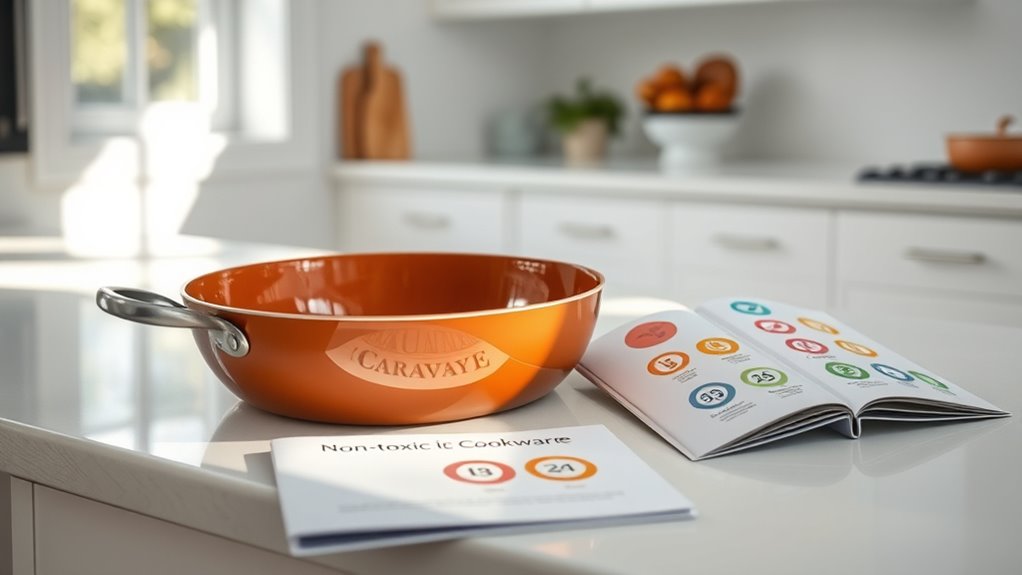
Before you trust any cookware, you need to understand the non-toxic standards it meets. Non-toxic cookware undergoes strict certification standards set by recognized certification bodies like the FDA, LFGB, or Prop 65.
These organizations require lab testing to ensure that heavy metals such as lead and cadmium are present only at safe levels. For example, Caraway pans have passed independent third-party safety verification, confirming their ceramic coating doesn’t leach harmful substances into your food during normal use.
You can verify these claims by checking certification databases like IAMPO.org or EPEAT. Always look for transparent documentation from manufacturers to confirm compliance.
Understanding these standards helps you choose cookware that’s truly safe, free from toxic leaching, and backed by reliable lab testing and certification.
Key Chemicals to Avoid in Cookware
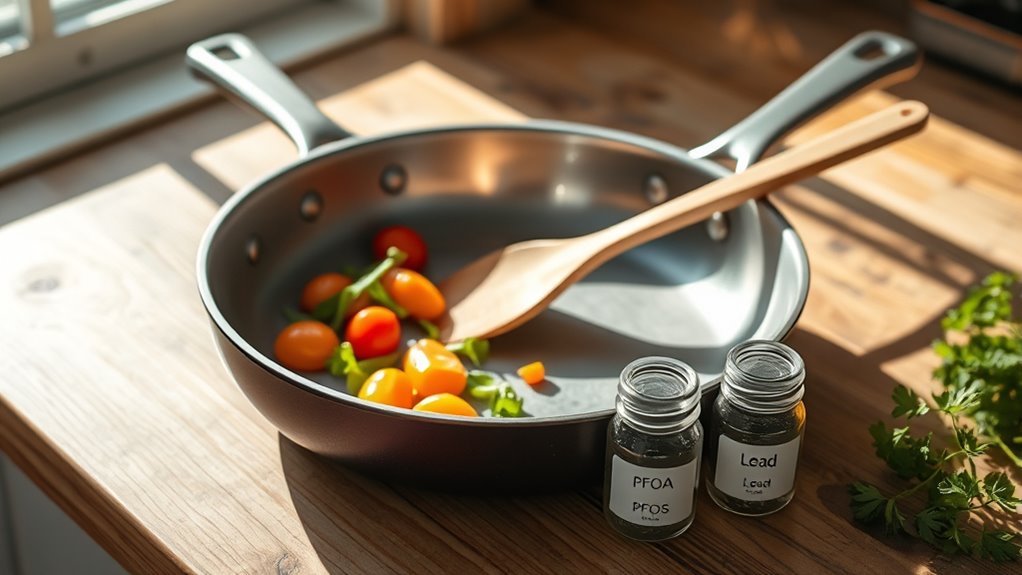
Knowing which chemicals to avoid helps you make safer choices when selecting cookware like Caraway pans. You want to steer clear of toxic chemicals such as PTFE, PFOA, and PFAS, which are often found in traditional non-stick pans and can leach harmful substances into your food.
Heavy metals like lead and cadmium are also a concern, as they pose serious health risks.
Caraway pans use a ceramic coating that’s inert, meaning it doesn’t release toxic fumes or chemicals when heated properly.
To be confident in your choice, look for cookware that undergoes rigorous lab testing and holds certifications from trusted organizations.
Tools like the Clearya app can help verify that your cookware is free from unsafe levels of these harmful substances.
Materials Used in Caraway Pans Explained
Although many cookware options claim to be safe, Caraway pans stand out by combining an aluminum core for even heating with a ceramic coating made from inorganic minerals. This ensures you get a lightweight, durable, and naturally non-stick surface free from harmful synthetic chemicals.
This ceramic coating contains no PTFE, PFOA, or PFAS, which are common toxic additives in traditional non-stick pans. The aluminum core promotes quick, even heat distribution, while the stainless steel base adds durability and makes the pans compatible with induction cooktops.
Certifications and Testing for Caraway Cookware
How can you be sure that Caraway cookware lives up to its non-toxic claims? Start by verifying their safety certifications through reputable sources like IAMPO.org. Caraway provides third-party verification, ensuring lab testing confirms heavy metals and chemical leaching remain below regulatory limits.
To confirm non-toxicity, check for certifications such as FDA, LFGB, and Prop 65 compliance. You can also use tools like the Clearya app to scan barcodes and access certification documentation directly.
Here’s what to do:
- Verify safety certifications on trusted databases.
- Review third-party lab testing results for heavy metals and chemical leaching.
- Confirm compliance with FDA, LFGB, and Prop 65 standards.
- Use verification apps to access transparent certification documentation.
This process guarantees Caraway’s claims are backed by rigorous testing and clear documentation.
How Independent Lab Tests Verify Safety
Because independent lab tests analyze cookware coatings for harmful substances like PFOA, PFAS, lead, and cadmium, they play a crucial role in confirming Caraway pans are truly non-toxic. These tests examine the chemical composition through rigorous laboratory testing to detect any toxic substances or heavy metals that could leach into your food.
Safety verification relies on detailed reports from certified labs, ensuring the pans meet strict non-toxic standards. Brands like Caraway often share these certifications, giving you transparent proof of compliance with international safety standards.
Identifying PFAS, PTFE, and PFOA-Free Cookware
When choosing cookware, you’ll want to confirm that Caraway pans are truly free of PFAS, PTFE, and PFOA. These chemicals are often found in traditional non-stick coatings and can pose health risks.
To identify genuinely non-toxic Caraway pans with a safe ceramic coating, follow these steps:
- Verify labels confirming PFAS, PTFE, and PFOA-free materials.
- Look for certifications like FDA, LFGB, or Prop 65, ensuring compliance with safety standards against toxic chemicals.
- Review lab testing reports or third-party analyses that confirm absence of harmful substances such as heavy metals.
- Use barcode apps or EPEAT databases to cross-check manufacturer claims.
Home Methods to Test Cookware Safety
Although manufacturer claims provide useful information, you can perform simple tests at home to check your Caraway pans’ safety. Start with a scratch test using a coin: if the coating flakes or scratches easily, it may signal compromised coating integrity.
Next, assess heat stability by heating the pan on low to medium and noting any unusual odors or melting.
Cook a tomato-based sauce to detect metal leaching; any metallic taste or discoloration could indicate issues.
Conduct a visual inspection for scratches, chips, or stains, as these can affect the pan’s non-toxic quality over time.
Additionally, use home testing kits or apps like Clearya to check for heavy metals.
These steps help ensure your cookware remains safe and truly non-toxic.
Comparing Caraway to Other Non-Toxic Brands
If you want to choose cookware that truly prioritizes your health, comparing Caraway to other non-toxic brands can help you make an informed decision. Caraway cookware stands out due to its FDA, LFGB, and Prop 65 third-party testing certifications, ensuring top food safety.
Unlike HexClad, which uses PTFE coatings with PFOA derivatives, Caraway avoids synthetic chemicals altogether.
Here’s how Caraway compares:
- Its ceramic coating is tested to prevent heavy metals leaching, unlike Green Pan’s Thermolon, which has faced chromium concerns.
- Le Creuset’s cast iron is non-toxic but lacks Caraway’s modern ceramic coating benefits.
- Verification tools like the Clearya app support Caraway’s safety claims.
- Caraway’s commitment to transparency through third-party testing guarantees consistent non-toxic quality.
This comparison highlights Caraway’s reliable, health-conscious design.
Best Practices for Maintaining Caraway Pan Safety
To keep your Caraway pans safe and effective, you should regularly check for scratches or chips that can damage the ceramic coating. Inspect pans carefully to spot any damage that might compromise the non-toxic ceramic coating.
Always use silicone or wooden utensils to protect the ceramic surface from scratches. Avoid cooking on high heat since overheating can degrade the coating and reduce safety.
Although Caraway pans are dishwasher safe, hand washing with mild detergent helps preserve the ceramic surface and extends their lifespan.
When storing, use pan racks or separators to prevent stacking damage.
Frequently Asked Questions
Is Caraway Cookware Really Toxic Free?
Caraway cookware isn’t toxic; you can trust it’s free from harmful chemicals like PTFE and lead. Certifications and independent tests back this up.
Just avoid high heat and metal utensils to keep it safe and lasting.
Are Caraway Pans Toxic if Scratched?
Think of your scratched Caraway pan as a sturdy fortress with minor cracks; it’s still safe. You won’t face toxicity unless the damage deepens.
Do Caraway Pans Have Microplastics?
No, Caraway pans don’t have microplastics because their ceramic coating is made from natural minerals, not synthetic polymers.
You can cook confidently knowing the coating won’t break down into harmful microplastics during use.
Does Caraway Pans Have PTFE?
Caraway pans don’t have PTFE, don’t use PTFE, and don’t release PTFE. You can trust their ceramic coating is free from it, so you’re cooking safely without worrying about harmful chemicals or toxic fumes.
Conclusion
You might wonder if all non-toxic claims hold up, but with Caraway pans, the proof is in the certifications and lab tests. By checking FDA, LFGB, and Prop 65 approvals, plus third-party results confirming no harmful chemicals like PFAS or PFOA, you can cook confidently.
Don’t just take their word for it—use apps like Clearya and compare brands to see why Caraway stands out as a truly safe, non-toxic option for your kitchen. Ensuring your cookware is free from toxins is essential for healthy cooking, and Caraway pans provide that peace of mind with verified safety standards.