How to Use Our Place Pans Safely in the Oven
You might not realize that Our Place pans can safely withstand oven temperatures up to 450°F, but only if you handle them correctly. Using these pans without proper care could damage their nonstick surface or warp the pan.
Before you place your pan in the oven, there are key steps you should follow to protect your cookware and ensure even cooking. Understanding these details will help you get the most out of your pan without risking damage.
Oven Temperature Limits for Our Place Pans
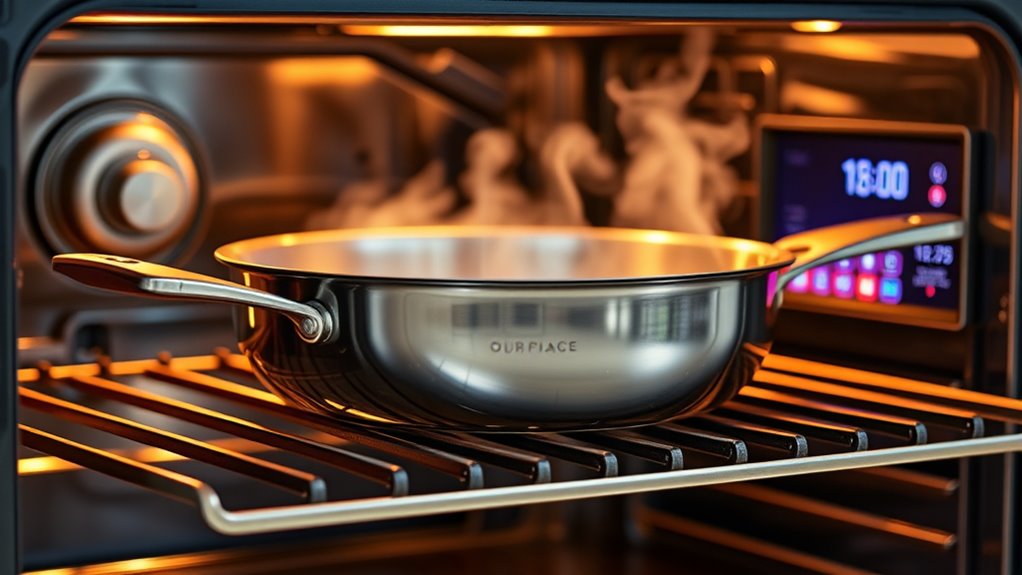
Although Our Place pans can handle oven temperatures up to 450°F, you should never surpass this limit to protect the ceramic nonstick coating and maintain the pan’s durability.
Always check the product label for specific temperature limits before oven use to ensure you’re within safe boundaries.
Staying within 450°F helps preserve the pan’s structural integrity and prevents damage from overheating.
Remember, Our Place pans are oven safe only up to this temperature, and ignoring oven safety guidelines can lead to warping or coating deterioration.
Avoid sudden temperature changes, such as moving a hot pan into a cold oven, to prevent thermal shock, which compromises durability.
Preparing Your Pan for Oven Use
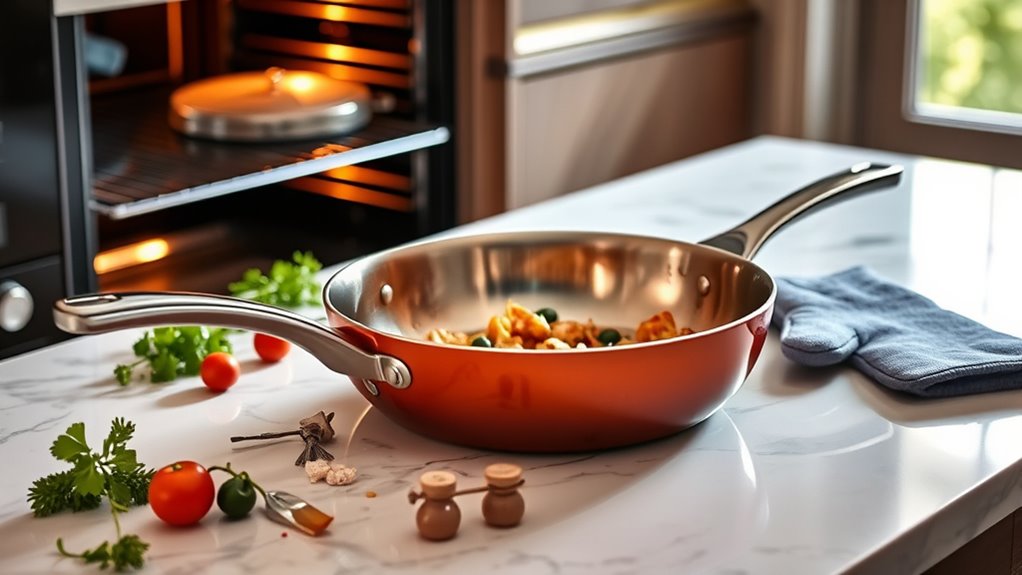
Before placing your Our Place pan in the oven, make sure it has completely cooled down to prevent warping or damage.
Check the maximum temperature for oven safety, typically up to 450°F for the Always Pan, and never exceed this oven-safe temperature.
Remove accessories like the beechwood spatula, as they aren’t designed for oven use.
When preheating your oven, avoid sudden temperature changes to protect the ceramic nonstick coating.
Follow the manufacturer instructions closely to maintain your pan’s quality.
Always handle carefully, using heat-resistant gloves to protect your hands when placing or removing the pan.
These steps help you avoid warping and preserve the pan’s performance, ensuring safe, effective oven use every time.
Safe Handling Practices During and After Cooking
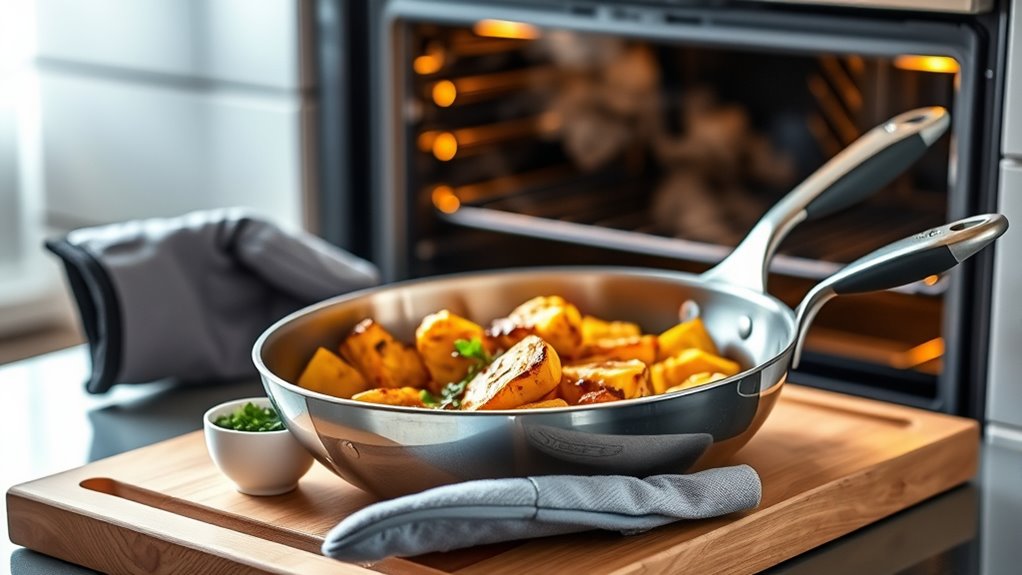
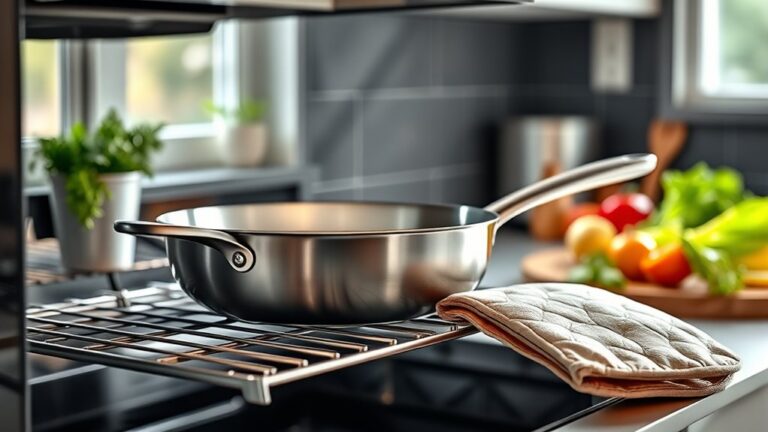
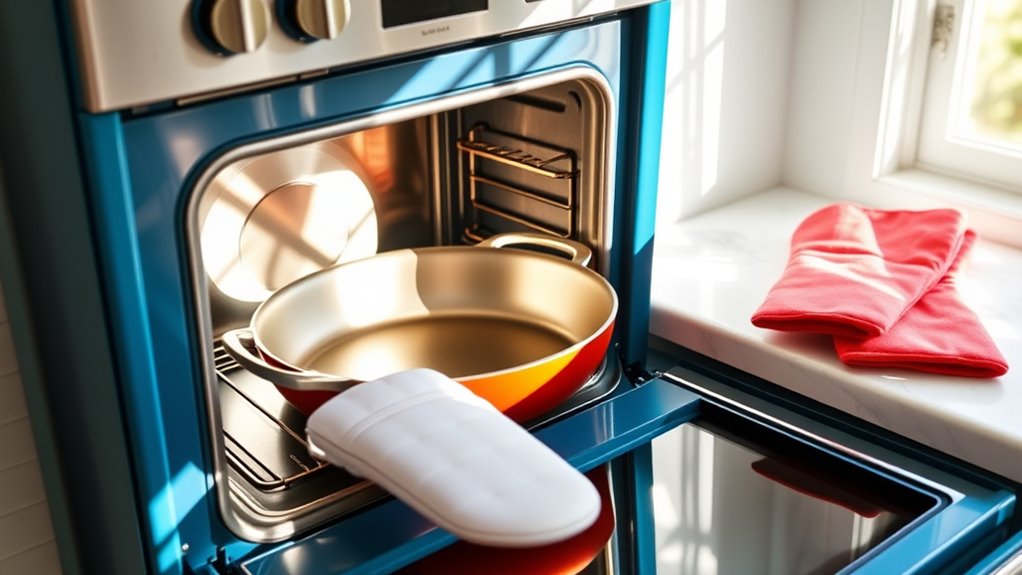
When you remove your Our Place pan from the oven, always use oven mitts or Hot Grips to protect your hands from the heat.
For proper oven handling, support the pan with both hands to maintain balance and avoid spills or drops.
After baking, place the hot pan on a heat-resistant surface to prevent damage to your counters and preserve the pan’s structural integrity.
Avoid sudden temperature change during the cooling process, as this can cause warping or cracking.
Remember not to exceed the manufacturer’s maximum oven temperature of 450°F to guarantee oven safety and protect the ceramic coating.
Following these safe handling practices during and after cooking will help maintain your pan’s durability and keep your kitchen safe.
Cleaning and Maintenance After Oven Use
After you’ve safely handled your Our Place pan post-cooking, you’ll want to focus on cleaning and maintaining it properly to keep it in top condition. Always allow the pan to cool completely to prevent warping.
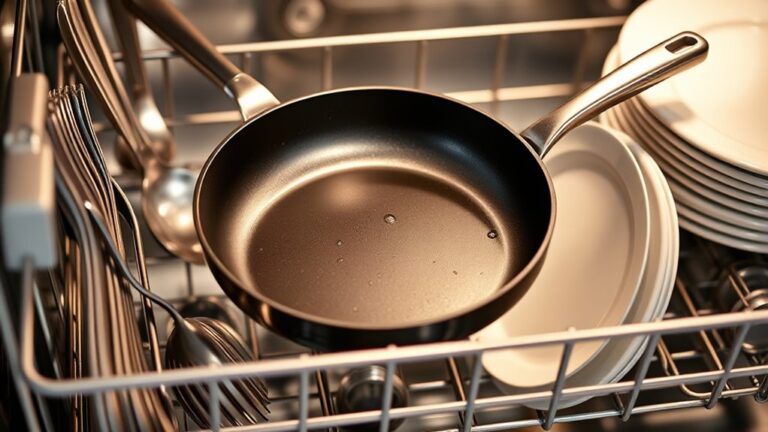
Hand wash with warm, soapy water using a soft sponge to protect the non-toxic ceramic coating. Avoid abrasive cleaners that can damage the surface. Never use a dishwasher.
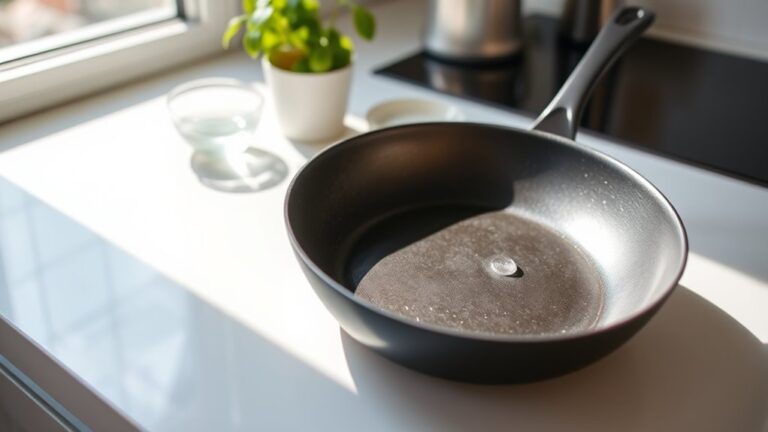
After washing, dry thoroughly to prevent water spots and maintain nonstick performance.
| Step | What to Do | Why It Matters |
|---|---|---|
| Cool Down | Let pan cool before washing | Prevents warping and damage |
| Gentle Cleaning | Hand wash with soft sponge | Maintains ceramic coating |
| Dry Thoroughly | Wipe or air dry completely | Avoids water spots, preserves nonstick |
Follow these steps to keep your oven-safe pan lasting longer.
Tips to Preserve Your Pan’s Nonstick Coating
To keep your pan’s nonstick coating in great shape, you’ll want to handle it with care during cooking and cleaning. Avoid using metal utensils on the ceramic nonstick surface to prevent scratches that damage the coating.
Also, steer clear of cooking at high temperatures, as excessive heat can degrade and discolor the nonstick layer. After oven use, always allow your pan to cool before cleaning to avoid warping and preserve coating integrity.
When washing, hand wash with warm, soapy water and a soft sponge. Never use abrasive cleaners, steel wool, or scouring pads, as they can wear down the ceramic nonstick finish.
Following these tips will help you maintain your pan’s performance and extend its lifespan.
Frequently Asked Questions
Can I Put My Our Place Pan in the Oven?
Yes, you can put your Our Place pan in the oven up to 450°F.
Just avoid direct heat on handles, use oven mitts, and make sure to check your model’s guidelines to keep it safe and in great shape.
Is Ourplace Oven Safe?
You can confidently slide your Our Place pan into the oven—it’s oven safe up to 450°F.
Just watch the handles and lids, and use mitts when grabbing it, so you’ll cook safely and stylishly every time.
Are Our Place Dishes Oven Safe?
Yes, Our Place dishes are oven safe up to 450°F, but you should check your specific dish’s material and handle type.
Remove lids or confirm they’re oven safe, and never exceed the recommended temperature.
How Do I Tell if My Pan Is Oven Safe?
Before Netflix existed, you’d check labels on your pan to see if it’s oven safe. Look for temperature limits, especially on handles.
If unsure, consult the care guide or contact customer support to avoid mishaps.
Conclusion
Treat your Our Place pan like a trusted dance partner—handle it with care and respect its limits. Keep the oven temperature at or below 450°F, let it cool completely before stepping into the heat, and avoid sudden temperature swings that could throw it off balance.
With gentle hands and mindful moves, you’ll keep its nonstick magic alive, ensuring every meal is a graceful performance worth repeating. Your pan will thank you with years of flawless cooking.
By following these simple steps, you can safely enjoy using Our Place pans in the oven while preserving their durability and nonstick surface. Safe oven use is key to maintaining your pan’s quality and performance over time.