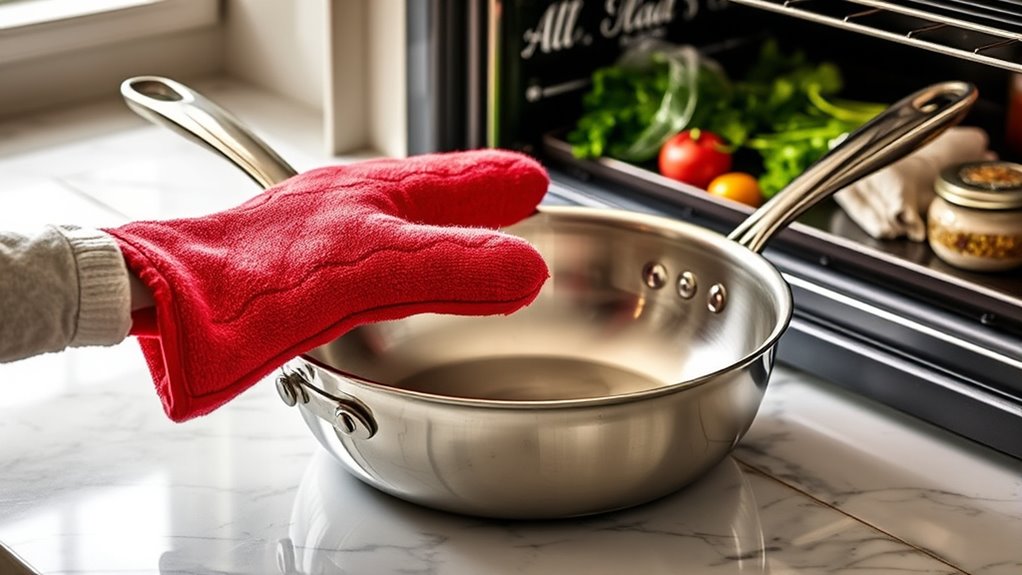
How to Use All-Clad Skillets Safely in the Oven
When you use your All-Clad skillet in the oven, you want to be sure it can withstand the heat without damage. Not all cookware is created equal, and even within the All-Clad range, there are important differences in materials and handle designs that affect oven safety. Understanding these details can protect your investment and ensure your meals come out perfectly cooked every time.
Let’s explore what you need to know before you preheat that oven. Knowing how to use All-Clad skillets safely in the oven helps extend the life of your cookware and guarantees better cooking results. Always check the specific oven-safe temperature limits for your skillet model.
Importance of Oven Safety for Cookware
Although All-Clad skillets are designed to handle high oven temperatures, you need to follow proper safety practices to safeguard your cookware and ensure it lasts. Using oven-safe cookware like an All-Clad skillet means you can enjoy versatile cooking methods, but you must respect the oven temperature limit specified in the manufacturer guidelines, often up to 600°F.
Ignoring these limits risks damaging the nonstick coating, reducing cooking performance, and compromising handle durability.
Avoid thermal shock by not moving the skillet abruptly between extreme temperatures. Proper oven safety prevents warping, melting, or coating degradation during high-heat cooking.
Materials and Construction of All-Clad Skillets
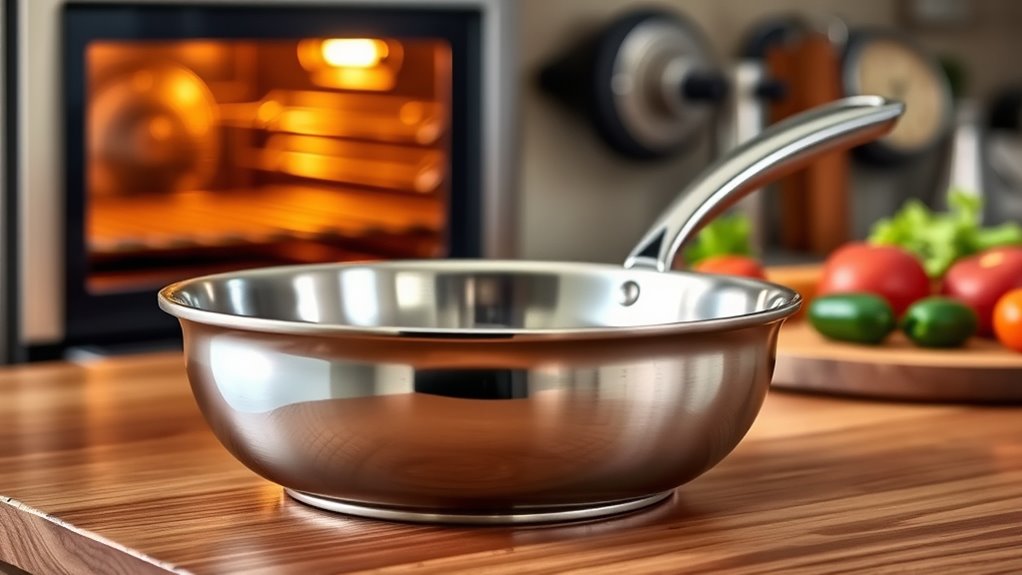
When you choose an All-Clad skillet, you’re getting cookware crafted with multiple layers of stainless steel and aluminum that work together to deliver exceptional heat conduction. This bonded cookware features a layered construction, combining durable materials to guarantee even heat distribution and performance during high-temperature cooking.
The exterior is typically stainless steel or aluminum, both known for their oven-safe qualities. Many All-Clad skillets come with riveted handles made of stainless steel, designed to withstand oven heat safely. However, some models include plasticized or phenolic handles, which aren’t oven safe. So, always check your skillet’s handle material before use.
Understanding these cookware materials and their construction helps you use your All-Clad skillet confidently and safely in the oven.
Checking Oven Compatibility and Temperature Limits
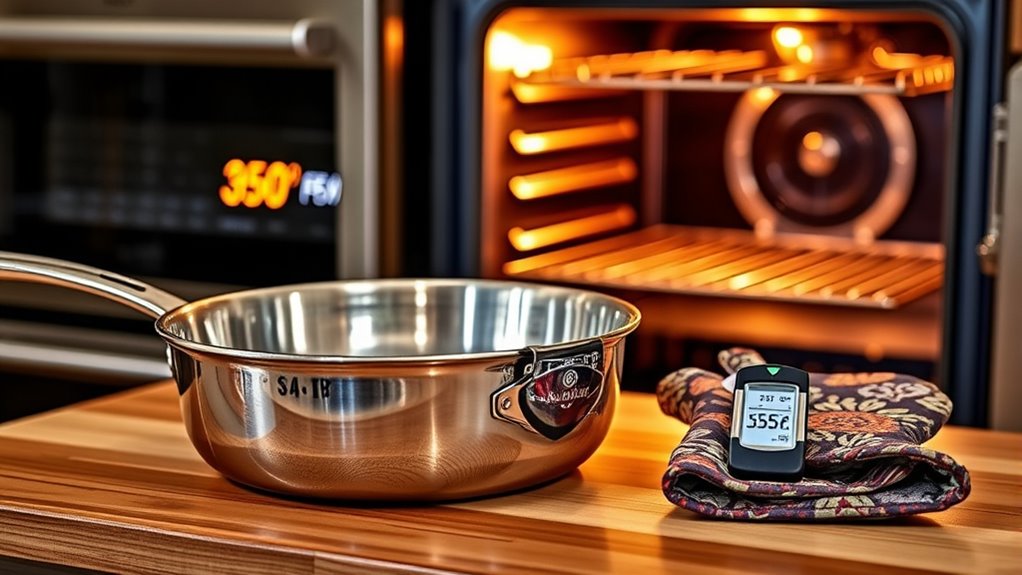
Before using your All-Clad skillet in the oven, you should always verify its oven compatibility and temperature limits to avoid damage. Check the manufacturer guidelines and product description to confirm if your skillet is oven-safe and suitable for oven use.
Most All-Clad skillets with stainless steel or cast iron handle material can safely withstand maximum temperatures up to 600°F. However, some models with plastic or phenolic handles are limited to 350°F or 400°F, so it’s essential to know your skillet’s specific temperature limits.
Also, verify if the skillet is dishwasher safe, which often correlates with higher oven compatibility.
Following the manufacturer’s maximum temperature ensures you protect your skillet material from warping or damage during oven use.
Identifying Oven-Safe Handles and Knobs
Since handles and knobs directly contact heat, you need to determine whether your All-Clad skillet’s components are oven safe before using it.
Most All-Clad stainless steel cookware features oven safe handles and knobs made from stainless steel or stainless-steel-clad materials, typically rated up to 600°F.
Avoid skillets with plasticized or phenolic handle materials, as these aren’t safe for oven use.
Always check manufacturer markings or labels on the handles and knobs for oven temperature ratings.
When you’re unsure, consult your product manual or contact the manufacturer directly to confirm compatibility.
Properly identifying oven safe handles and knob materials ensures safe cooking and prevents damage during oven use, keeping your All-Clad skillet in top condition.
Recommended Oven Temperatures for All-Clad Skillets
Although All-Clad stainless steel skillets can handle oven temperatures up to 600°F, you’ll want to be cautious with nonstick coatings and tempered glass lids, which have lower heat limits.
To guarantee your skillet remains oven safe and performs well, follow these temperature guidelines:
- Stainless steel All-Clad skillets withstand oven temperatures up to 600°F, suitable for high heat cooking.
- Nonstick coating limits usually max out at 450°F. Exceeding this risks damaging the surface.
- Tempered glass lids should be removed above 350°F to prevent cracking.
- Always consult the manufacturer guidelines for your specific All-Clad skillet model to confirm its temperature limits.
Staying within these oven temperature ranges preserves your skillet’s performance and longevity while ensuring safe use.
Best Practices for Using Skillets in Oven Cooking
When you use your All-Clad skillet in the oven, always confirm that your model can withstand the heat and check its maximum temperature limit in the manufacturer’s guidelines.
Before placing the skillet inside, preheat the oven to the desired temperature to ensure even cooking and prevent thermal shock.
Remember to remove any glass lids if you’re cooking above 350°F, as most aren’t oven-safe at higher temperatures.
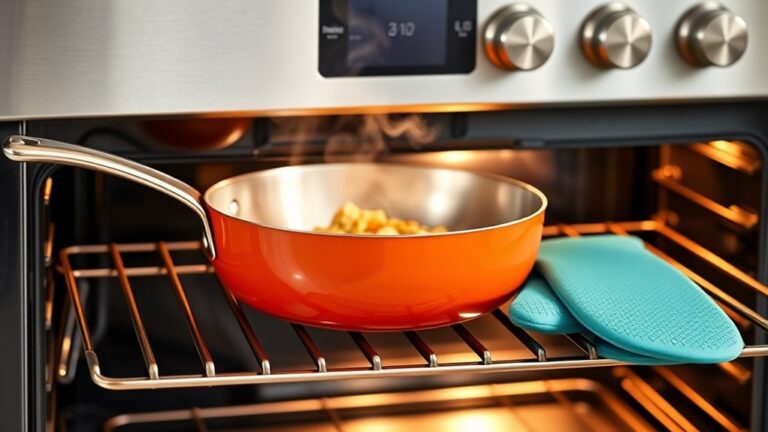
Use heat-resistant gloves or oven mitts for safe handling when inserting or removing the skillet to avoid burns.
After cooking, allow the skillet to cool gradually to prevent damage from sudden temperature changes.
Following these best practices will help you use your All-Clad skillet safely and maintain its performance over time.
Cleaning and Maintenance After Oven Use
After using your All-Clad skillet in the oven, let it cool completely before washing to avoid warping or damage caused by sudden temperature changes.
Allow your All-Clad skillet to cool fully after oven use to prevent warping or damage.
For proper cleaning and maintenance, follow these steps:
- Hand wash with warm water and mild soap using a soft sponge to protect the finish.
- Avoid abrasive cleaners and steel wool to prevent scratches and preserve performance.
- For stubborn residue, boil equal parts water and white vinegar, then gently scrub with a wooden spoon.
- Dry thoroughly immediately after washing to prevent water spots and ensure rust prevention.
Comparing All-Clad Skillets With Other Oven-Safe Cookware
Since you want cookware that performs well under high heat, All-Clad skillets stand out for their excellent oven safety and heat distribution.
Their stainless steel construction guarantees durability and resistance to warping, unlike some aluminum or ceramic cookware.
While cast iron pans handle higher temperatures and are inherently oven safe, All-Clad skillets typically tolerate up to 600°F, limited mostly by handle materials.
Compared to nonstick skillets, which usually have a lower temperature limit around 450°F, All-Clad offers greater versatility for baking and broiling.
The layered design of All-Clad skillets promotes even heat distribution, outperforming many cheaper stainless steel or nonstick options.
When choosing oven-safe cookware, All-Clad skillets balance durability, temperature tolerance, and performance better than most alternatives.
Tips for Purchasing and Verifying Oven-Safe Cookware
Although many cookware options claim oven safety, you should always verify the manufacturer’s specifications before using any skillet in the oven. To ensure you pick truly oven-safe cookware, follow these tips:
- Check manufacturer guidelines to confirm oven-safe ratings and temperature limits, typically 500°F or higher.
- Review the material composition. Cast iron and stainless steel usually handle oven heat well, but nonstick coatings might’ve lower thresholds.
- Inspect handles and knobs; avoid plasticized ones and favor stainless steel or silicone for oven durability.
- Research brand reputation and read customer reviews to confirm real-world oven safety and durability.
Following these steps helps you select reliable cookware that meets your oven cooking needs safely and effectively.
Frequently Asked Questions
Are All-Clad Pans Safe for the Oven?
Most All-Clad pans are oven safe if they have stainless steel or copper core construction and metal handles.
Just check your specific pan’s temperature limit and avoid using non-stick coatings or plastic handles in the oven.
What Is the Lawsuit Against All-Clad?
You might expect lawsuits against big brands, but there aren’t any confirmed against All-Clad.
While some users mention coating issues, you can trust their warranties and reputation without fearing legal troubles right now.
How to Properly Heat an All-Clad Pan?
You should heat your All-Clad pan gradually on low to medium heat. Add a few drops of oil or butter, wait until it shimmers, then start cooking.
Avoid heating it empty on high to prevent damage.
Can I Put a Stainless Steel Pan in the Oven at 400 Degrees?
Yes, you can safely put your stainless steel pan in the oven at 400 degrees. Just double-check your pan’s guidelines to ensure it is oven-safe at that temperature.
Avoid sudden temperature changes to prevent warping or damage. Also, remove any tempered glass lids before placing the pan in the oven to avoid breakage.
Conclusion
When using your All-Clad skillet in the oven, remember that safety comes first—measure twice, cook once. Always check temperature limits and handle materials before preheating, and never exceed recommended heat levels.
Removing glass lids above 350°F and using oven mitts will protect you and your cookware. With proper care and attention, your skillet will serve you well for years.
Follow these tips, and you’ll get the best results without any kitchen mishaps. Safe use of All-Clad skillets in the oven ensures longevity and optimal cooking performance.