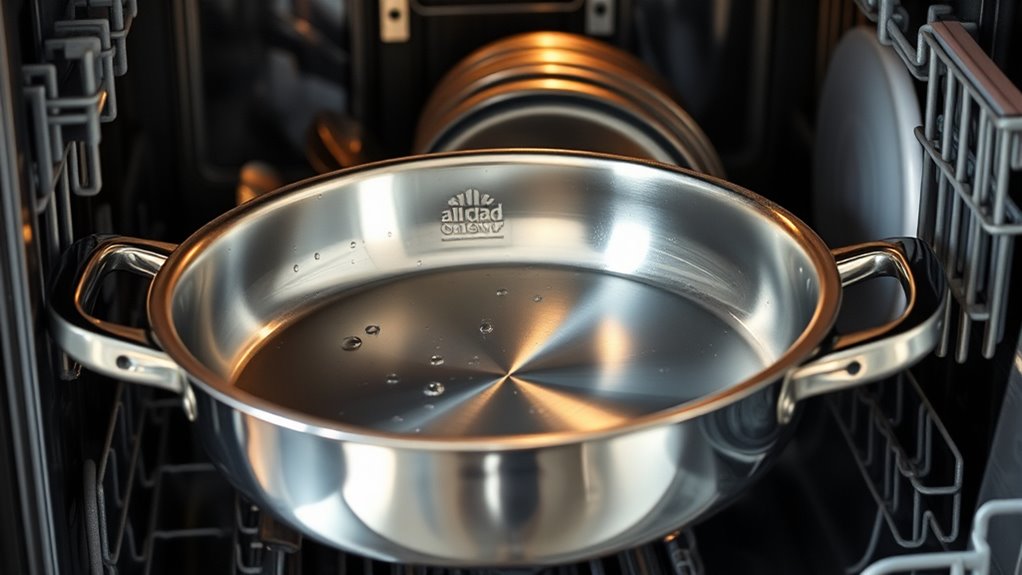
How to Safely Clean All-Clad Pans in the Dishwasher
Cleaning All-Clad pans in the dishwasher can be like steering a minefield—you want to preserve their shine without causing hidden damage. While many of these All-Clad cookware pieces are dishwasher safe, not all materials inside your collection handle the heat and detergents equally well.
Before you toss your All-Clad pans into the dishwasher rack, there are important details about compatibility, proper loading, and dishwasher settings that you’ll want to consider. Following the right steps will help keep your pans looking their best and extend their lifespan.
Understanding All-Clad Cookware Materials
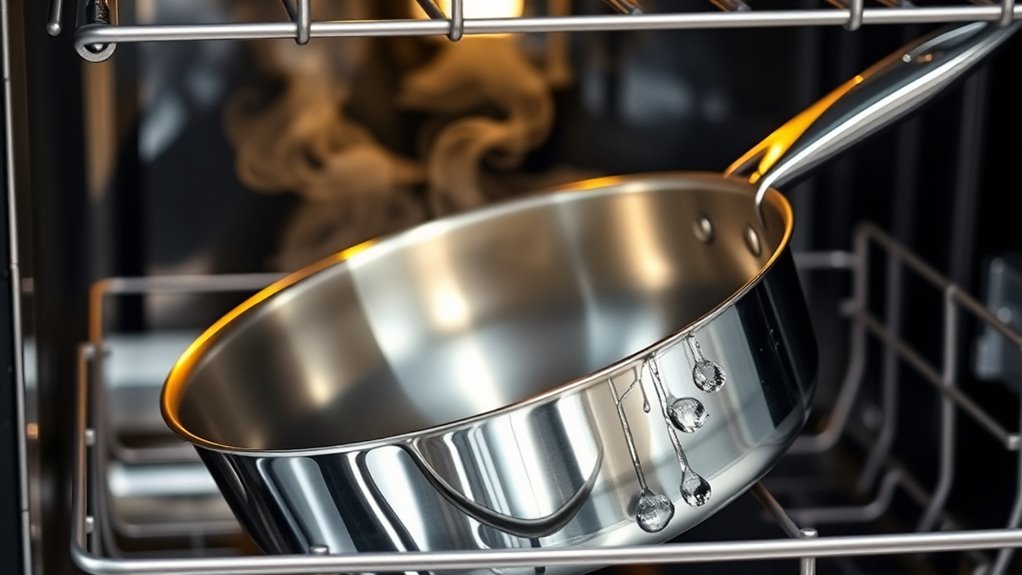
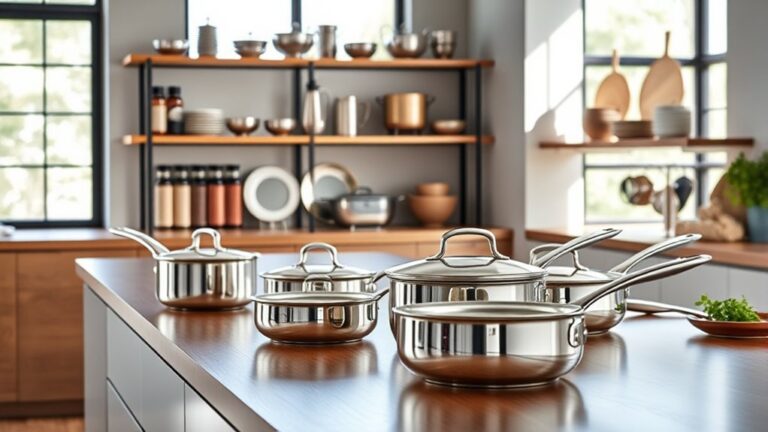
What makes All-Clad cookware stand out is its carefully selected materials. You’ll find stainless steel, anodized aluminum, and copper cores used in different series, each chosen for durability and ideal heat conduction.
For example, the MC2 line combines a brushed aluminum exterior with a stainless steel interior, enhancing both strength and appearance.
While stainless steel is known for being dishwasher safe and corrosion-resistant, anodized aluminum layers offer durability but can react with harsh dishwasher detergents.
This reaction may cause discoloration or damage to the anodized finish, so it’s essential to understand these materials before cleaning.
Knowing the differences helps you care for your All-Clad pans properly, preserving their quality and performance for years.
Dishwasher Compatibility of All-Clad Pans
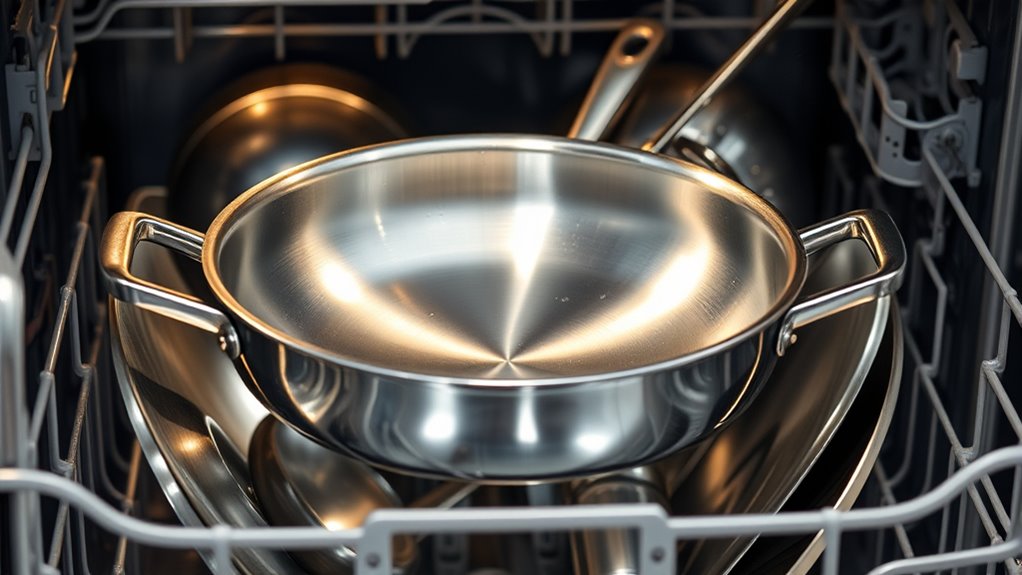
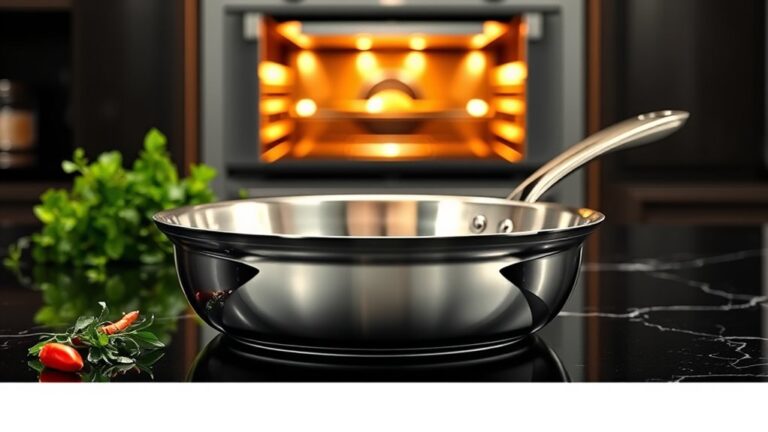
Because All-Clad pans feature different materials, their dishwasher compatibility varies considerably. If your pan has a stainless steel exterior, it’s generally dishwasher safe and can handle regular cleaning cycles without issue.
However, aluminum or anodized finishes are more delicate and not designed for dishwasher use. Here’s what you need to know:
Aluminum or anodized finishes are delicate and should be kept out of the dishwasher to prevent damage.
- Stainless steel All-Clad pans resist discoloration and maintain their shine in the dishwasher.
- Aluminum or anodized pans risk discoloration and damage as dishwasher detergents dissolve protective layers.
- Repeated dishwasher exposure accelerates dulling and staining, reducing your pan’s lifespan.
To keep your All-Clad cookware looking sharp, avoid the dishwasher unless your pan explicitly states it’s dishwasher safe.
Effects of Dishwasher Detergents on Aluminum Surfaces
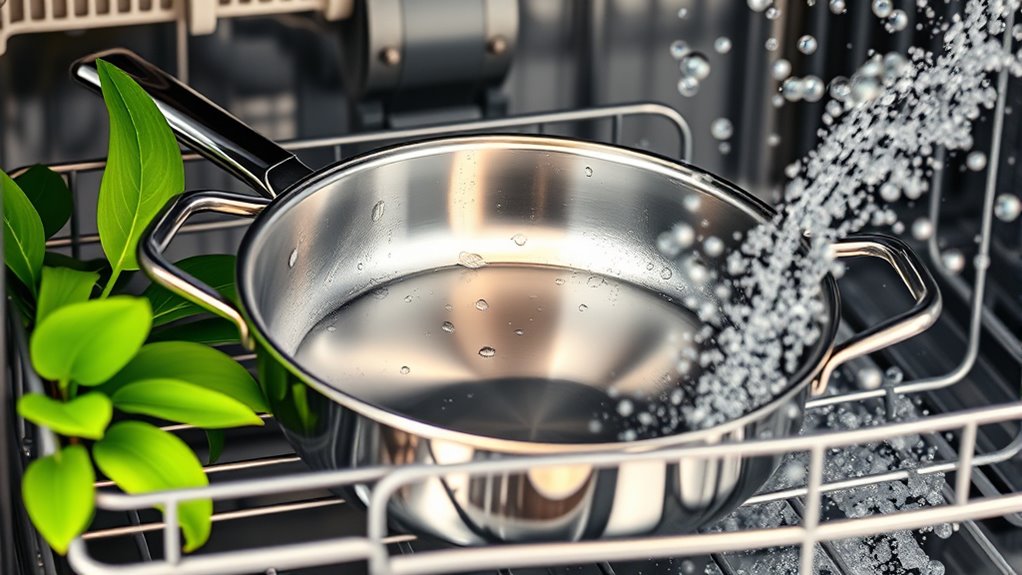
Although dishwasher detergents make cleaning convenient, their alkaline ingredients like sodium hydroxide and sodium carbonate can damage aluminum surfaces on your All-Clad pans. These chemicals have a high pH that dissolves the protective aluminum oxide layer, causing discoloration.
Over time, repeated dishwasher detergent exposure strips away the anodized dye, making the aluminum look light gray or streaked. The strong jets and agitation inside the dishwasher speed up this chemical reaction, worsening surface damage.
As a result, your aluminum All-Clad pans may develop irreversible spots and streaks after multiple washes. To preserve the appearance and integrity of your pans, it’s important to understand how dishwasher detergents interact with aluminum and consider alternative cleaning methods that avoid these harsh chemicals.
Proper Loading Techniques for Dishwasher Cleaning
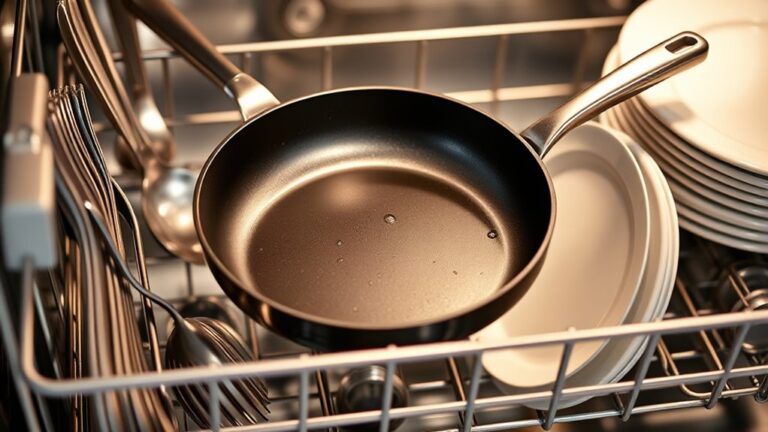
When you load your All-Clad pans in the dishwasher, placing them on the top rack helps protect them from harsh jets and excessive heat. Proper loading is essential to prevent damage and guarantee water circulates effectively around each pan.
Here’s how to load your pans safely:
- Space pans adequately to allow water and detergent to reach all surfaces evenly.
- Position handles outward and avoid stacking pans to prevent scratching and warping.
- Keep pans away from other metal items to avoid chipping or scratching the finish.
Following these steps during loading minimizes the risk of damage and ensures thorough cleaning.
Once the cycle ends, remove your pans promptly to avoid water spots and discoloration, especially on aluminum surfaces.
Recommended Dishwasher Settings for All-Clad Pans
To protect your All-Clad pans during dishwasher cleaning, you should select settings that minimize heat and agitation. Opt for the gentle cycle to ensure a soft wash that won’t harm your cookware’s finish.
Avoid high-temperature or sanitize cycles, as these can damage the pans. Choose dishwasher settings with low agitation to prevent knocking or scratching during the wash.
It’s best to use a short wash cycle to limit prolonged exposure to water and detergents, which could degrade the exterior. Also, skip extended drying or heat-dry options since excessive heat can accelerate discoloration, especially on aluminum surfaces.
Pre-treatment Methods for Stubborn Stains
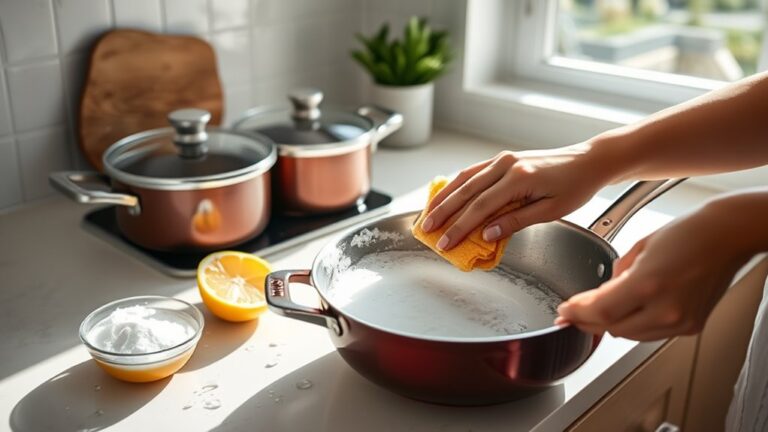
If stubborn stains persist on your All-Clad pans, you can tackle them effectively with a few simple pre-treatment methods before regular cleaning. Pre-treatment helps loosen residues, making your dishwasher cycle more efficient. Try these steps:
- Make a paste of baking soda and water, apply it to stains, and let it sit for 15-20 minutes before gently scrubbing with a nonabrasive sponge.
- Soak the pan in warm water mixed with a few drops of dish detergent or vinegar to soften baked-on grime.
- For tough discoloration, boil a mixture of water and white vinegar in the pan for 10-15 minutes to lift stubborn stains.
Avoid harsh abrasives to protect your pan’s finish during pre-treatment and dishwasher cleaning.
Hand Washing Vs. Dishwasher: Pros and Cons
After using pre-treatment methods to tackle stubborn stains, deciding how to clean your All-Clad pans becomes important. Hand washing with mild soap and warm water offers better maintenance, preserving finishes and preventing damage.
Dishwashers provide convenience but risk discoloration and accelerated wear due to harsh detergents and high heat. Here’s a quick comparison to help you choose:
| Method | Pros | Cons |
|---|---|---|
| Hand Washing | Preserves finish, controls damage | Time-consuming |
| Dishwasher | Convenient, quick | Can cause discoloration, void warranty |
| Maintenance | Extends pan life, reduces scratches | Requires extra effort |
For longevity and appearance, hand washing is generally recommended over the dishwasher for your All-Clad pans.
Common Discoloration Issues and How to Address Them
While using your All-Clad pans, you might notice gray streaks or discoloration appearing on the anodized aluminum exterior, especially after running them through the dishwasher. This happens because dishwasher detergents contain alkaline chemicals that dissolve the aluminum oxide layer, causing streaking and fading.
To address discoloration:
- Avoid dishwasher use to prevent further damage.
- Hand wash your pans with mild detergent and a soft sponge.
- If discoloration occurs, polish gently with a non-abrasive cleaner designed for anodized aluminum.
Keep in mind, once the anodized finish is compromised by dishwasher exposure, discoloration is often permanent.
Protect your pans by steering clear of harsh dishwasher detergents to maintain their sleek aluminum look.
Maintaining the Finish and Longevity of Your Cookware
Because harsh dishwasher detergents contain alkalis that react with aluminum, you should hand wash your All-Clad pans using warm water and a non-abrasive sponge to preserve their finish.
Dishwasher detergents often have compounds like sodium hydroxide that can cause discoloration and damage over time.
Repeated dishwasher cycles strip the anodized layer and dye, leading to fading and streaking.
Avoid abrasive scrubbers or steel wool, as they scratch and diminish the cookware’s protective coating.
Instead, gently clean stains promptly with mild methods to maintain both the look and function of your pans.
Frequently Asked Questions
Is It Okay to Put All-Clad in the Dishwasher?
You can put some All-Clad stainless steel pans in the dishwasher, but avoid it for nonstick, anodized, or aluminum ones.
To keep your pans looking great and lasting longer, it’s best to hand wash them.
What Is the Lawsuit Against All-Clad?
Over 1,000 customers sued All-Clad, claiming dishwasher use damages their cookware’s anodized aluminum exterior.
You’ll want to know this lawsuit argues All-Clad didn’t clearly warn about risks, despite their claims of dishwasher safety.
How Do You Clean All-Clad Pans?
You should clean your All-Clad pans by hand with warm water, mild soap, and a soft sponge.
For tough stains, use a nonabrasive cleaner and avoid abrasive pads to keep the finish looking great.
What Ruins Pans in the Dishwasher?
Dishwasher detergents and high-pressure jets ruin your pans by stripping protective layers, causing discoloration, streaks, and scratches.
Over time, this damages their finish and integrity, making them look worn and reducing their lifespan considerably.
Conclusion
You might worry that using the dishwasher will damage your All-Clad pans, but by following simple steps—like loading them properly, choosing gentle settings, and pre-treating stains—you can keep them looking great without extra effort. Just avoid putting anodized aluminum pieces inside and skip harsh cycles.
With a little care, your pans will stay durable and beautiful, making cleanup easier and letting you focus on cooking, not scrubbing. Proper dishwasher use helps maintain the quality of your All-Clad cookware, ensuring it lasts for years. Remember, safe cleaning practices are key to preserving your investment in these high-quality pans.