How to Use All-Clad Pans Safely in the Oven
You might not realize that not all All-Clad pans handle oven heat the same way, and pushing them beyond their limits can cause damage or safety risks. Knowing the specific temperature thresholds and how to prepare your cookware before placing it in the oven is vital. Understanding how to use All-Clad pans safely in the oven will help you maintain their quality and ensure safe cooking.
If you want to keep your pans in top condition and cook safely, understanding these details will make all the difference. Always check the manufacturer’s guidelines for maximum oven temperatures for your specific All-Clad pans. Preparing your cookware properly before placing it in the oven can prevent warping or other damage.
Understanding Oven Safety Limits for All-Clad Pans
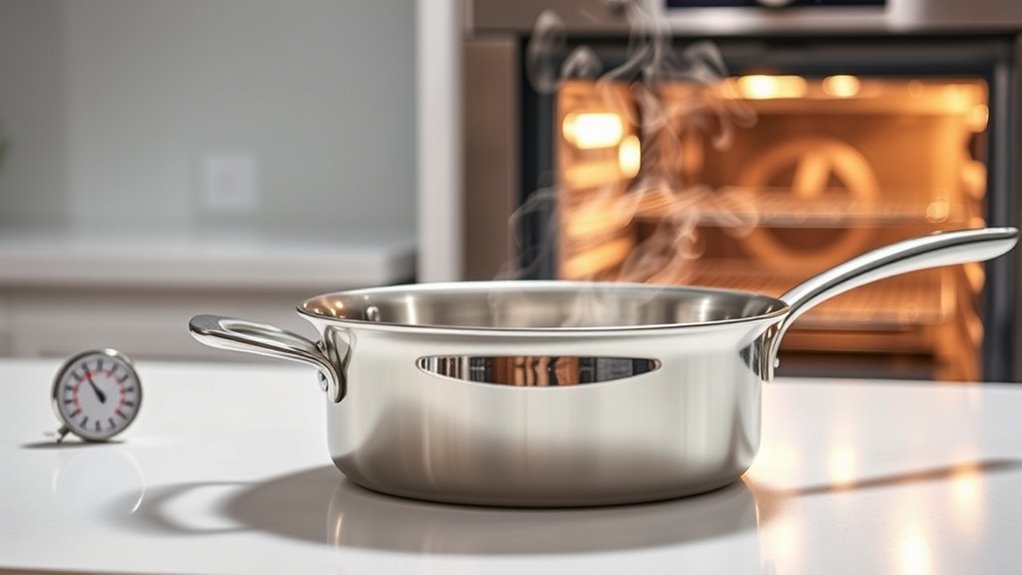
Although All-Clad pans are designed for high performance, you need to know their oven safety limits to avoid damage. Different All-Clad lines have specific temperature thresholds; for example, the LTD2 is oven safe up to 500°F, while the Copper Core pans handle up to 600°F.
Know your All-Clad pan’s oven limits: LTD2 up to 500°F, Copper Core up to 600°F.
Pay close attention to the handles and knobs, as those made from phenolic or plasticized materials usually tolerate heat only up to 400°F. Exceeding these limits risks melting or warping.
Nonstick coatings typically withstand temperatures up to 450°F, so avoid going beyond that to protect the surface. The manufacturer confirms that lids are generally oven safe up to 600°F, but you should always verify the temperature rating of each component.
Understanding these limits guarantees your pans stay in great shape and you maintain oven safety.
Preparing All-Clad Cookware for Oven Use
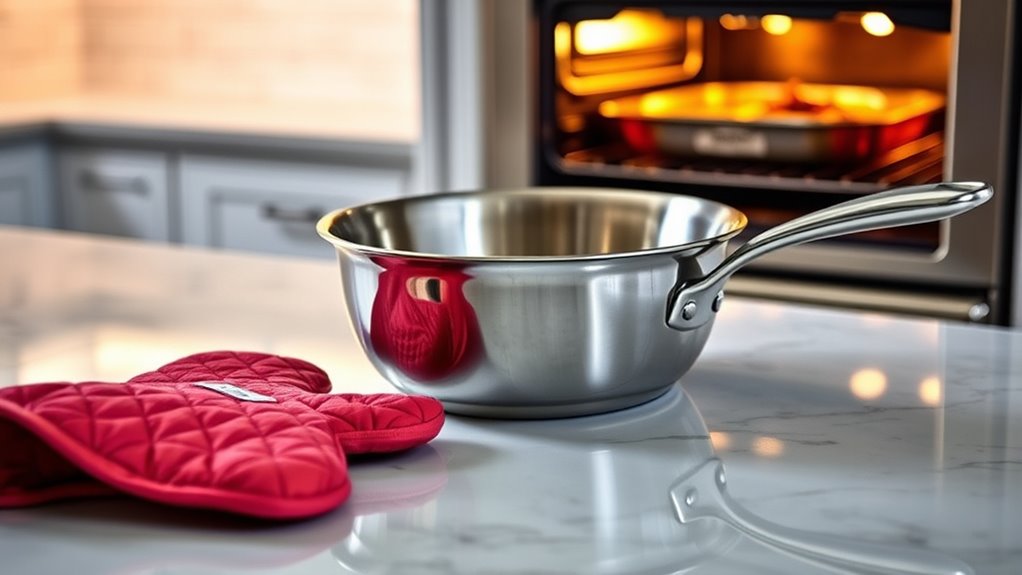
Before you put your All-Clad cookware in the oven, make sure to check that both the pan and its handles can safely withstand the temperature you plan to use. Verify the temperature rating of your specific All-Clad model, as most are oven-safe up to 500°F or higher.
Remove any plastic handles or knobs before oven use, since these aren’t oven-safe and can melt. If your pan has removable handles, take them off to avoid damage.
Also, confirm if the lid is oven-safe, with many rated up to 600°F.
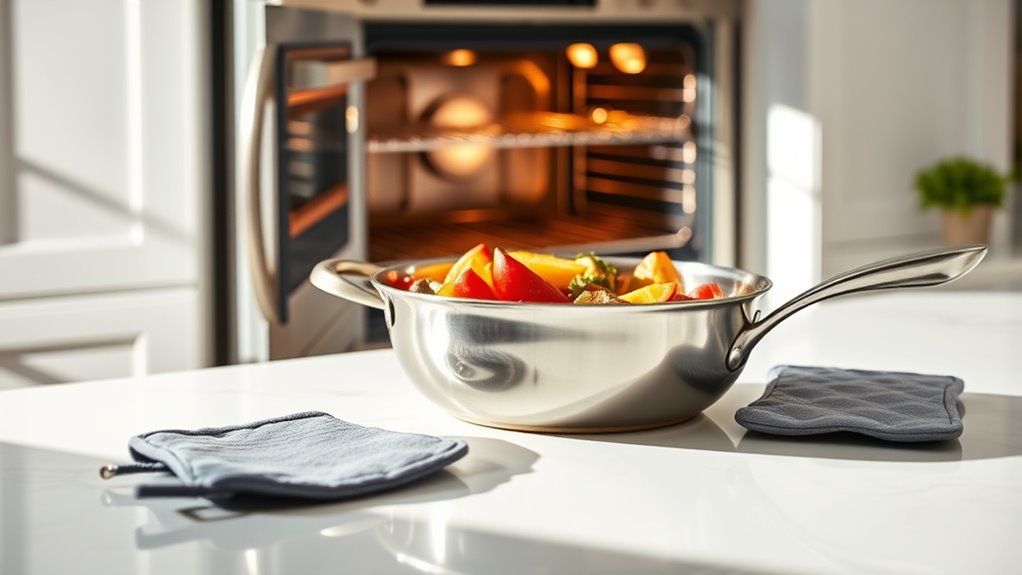
Always preheat the oven fully before placing your cookware inside to prevent thermal shock. Use oven mitts when handling hot pans, and after cooking, allow the pan to cool completely to avoid warping.
Consider covering your cookware appropriately if needed during baking.
Managing Heat and Temperature in the Oven
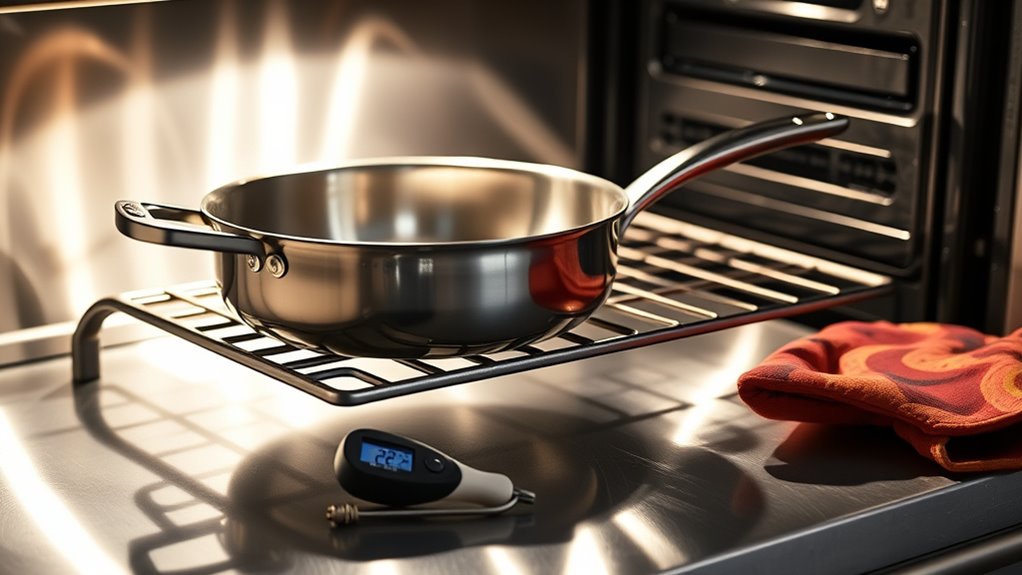
When you use All-Clad pans in the oven, managing heat properly helps prevent warping and damage. Always check the oven safe ratings, especially if your pan has plastic handles, which mightn’t tolerate high heat.
Avoid preheating empty pans; add food or liquids first to maintain cookware integrity and avoid warping. Keep your oven temperature within the manufacturer’s recommended limits. All-Clad pans are generally safe up to 500°F, but exceeding this risks damage.
When handling hot pans, use oven mitts for handle safety, as handles and knobs can become extremely hot. Effective heat management means respecting these guidelines to prolong your cookware’s lifespan and ensure safe cooking.
Handling and Using Lids in Oven Cooking
Since All-Clad lids can withstand oven temperatures up to 600°F, you can confidently use them for high-heat cooking and broiling.
Always check that your oven-safe lids are made from materials like stainless steel or tempered glass and feature heat-resistant handles designed for oven use.
Avoid lids with plastic parts or phenolic handles, as these can melt or warp under high oven temperature.
When handling lids during lid removal, use oven mitts to protect your hands from burns.
Never place lids directly on stovetops or open flames, as this can damage sensitive components.
Cleaning and Maintaining Oven-Used All-Clad Cookware
Although All-Clad cookware is built to withstand high oven temperatures, you’ll want to let your pans cool completely before washing to avoid warping or damage.
Always hand wash your pans using warm water and a soft sponge or cloth, steering clear of abrasive pads that could harm the finish.
Hand wash with warm water and a soft sponge, avoiding abrasive pads to protect the finish.
For stubborn stains or discoloration, boil equal parts white vinegar and water in the pan, then scrub gently to lift residue without causing damage.
Avoid oven cleaners, steel wool, or harsh chemicals, as they can ruin the surface.
After washing, dry your cookware thoroughly to prevent water spots and maintain its integrity.
Never soak your pans or plunge hot cookware into cold water; these practices can lead to warping, reducing your All-Clad pans’ lifespan and performance.
Avoiding Common Mistakes With Oven Cooking and All-Clad Pans
To safeguard your All-Clad pans and guarantee safe oven cooking, you need to avoid common mistakes like placing pans with plastic handles inside or preheating them empty, which can cause warping or damage.
Always confirm your pan’s maximum oven safe temperature, typically up to 500°F or 600°F depending on the model.
Never use non-oven-safe pans for acidic foods, as this can damage the cookware’s surface.
When handling hot pans, use oven mitts to protect yourself from burns since handles and edges get extremely hot.
Avoid preheating pans without food inside to prevent warping and preserve the nonstick or layered steel construction.
Choose appropriate cookware designed for your cooking method to maintain your All-Clad’s performance and longevity in the oven.
Frequently Asked Questions
Can I Put All-Clad Pans in the Oven?
Yes, you can put All-Clad pans in the oven, but always check your specific pan’s temperature limit and handle material.
Stainless steel pans handle up to 600°F, while nonstick ones usually max out at 500°F.
What Is the Lawsuit Against All-Clad?
Oh, you didn’t hear? All-Clad’s nonstick pans allegedly throw surprise parties by peeling and flaking!
Lawsuits claim they misled you about durability and safety, so you might want to read those fine print warnings more carefully.
Can I Put a Stainless Steel Pan in the Oven at 400 Degrees?
Yes, you can put a stainless steel pan in the oven at 400 degrees, as long as the handles and knobs are oven-safe.
Just avoid preheating empty pans and always use oven mitts to handle hot cookware.
How to Properly Heat an All-Clad Pan?
You properly heat your All-Clad pan by starting on low to medium heat, adding oil or food before heating, and gradually increasing temperature while monitoring it.
Ensure it never exceeds 500°F to protect the pan’s integrity.
Conclusion
You might think All-Clad pans are just fancy stovetop tools, but they’re actually built to brave the oven—just don’t forget their limits. Ignoring temperature guidelines or leaving on plastic handles won’t make your cooking any more exciting; it’ll just ruin your pricey cookware.
So, use those oven-safe features wisely, treat your pans right, and you’ll get perfect meals without the drama. After all, even the best pans don’t appreciate a fiery surprise.
By following these tips on how to use All-Clad pans safely in the oven, you ensure your cookware lasts longer and performs better. Proper care and attention to oven usage are key to maintaining your investment.