How to Clean All Clad Pans in 10 Essential Steps
If you’re looking to keep your All Clad pans in top shape, knowing the right cleaning steps is key. Proper All Clad pan cleaning helps avoid damage while removing stubborn food residue effectively. However, it’s not always straightforward to clean these high-quality pans without causing wear.
By following a clear, systematic approach, you can restore your pans’ shine and performance without hassle. Let’s walk through the essential steps that make maintaining these quality pans manageable and effective.
Prepare Your Pan for Cleaning
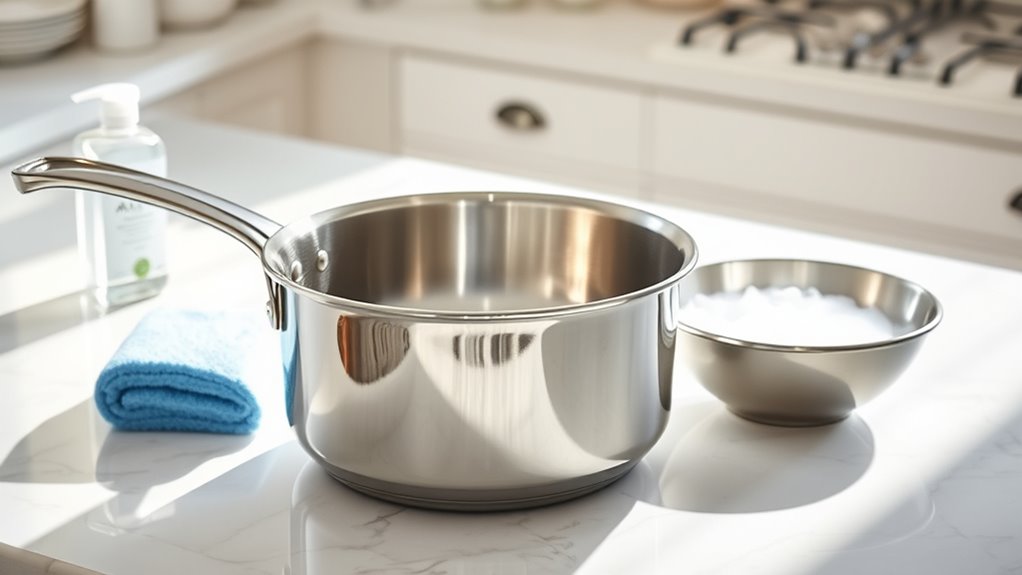
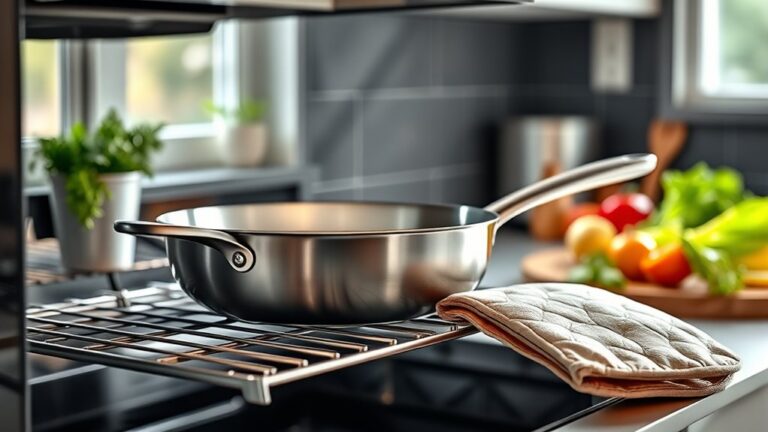
Before you start cleaning your All Clad pan, make sure it has cooled completely to prevent warping. Since All Clad pans are made of stainless steel, sudden temperature changes can cause damage.
Begin by removing any loose food or debris with a paper towel or spatula.
Start by wiping away any loose food or debris with a paper towel or spatula.
Next, fill your pan with warm water to loosen stuck-on bits of food without using hot water right away, which could stress the metal.
Let the pan soak briefly, then use a non-abrasive sponge or long-handled brush to gently scrape away residue.
After cleaning, dry your pan thoroughly with a soft cloth to prevent water spots and maintain its shiny finish.
Preparing your pan properly ensures effective cleaning while protecting the stainless steel surface.
Use Warm Water and Mild Dish Soap
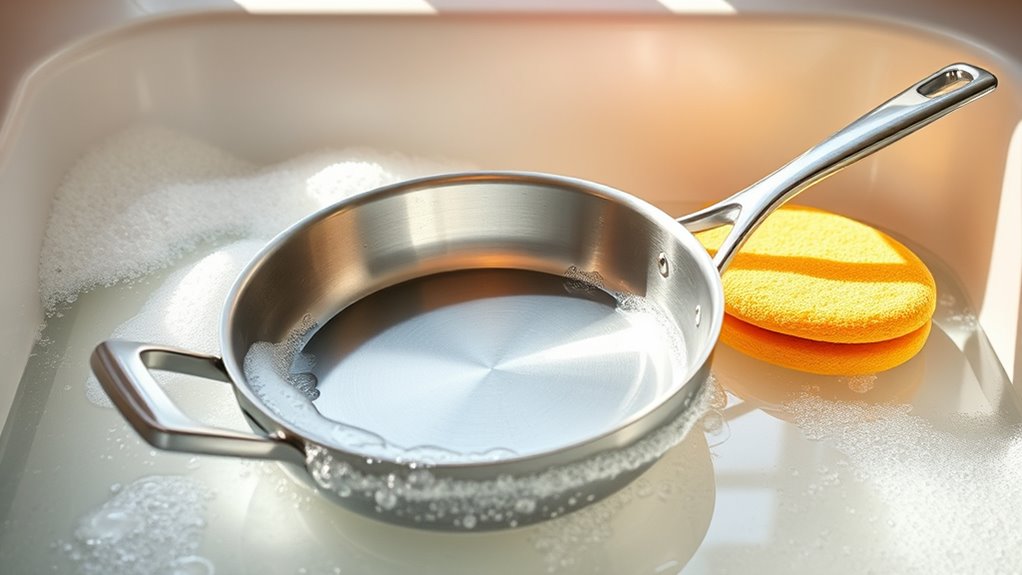
While your All Clad pan is still warm from cooking, rinse it with warm water to remove loose food particles.
Next, apply a small amount of mild dish soap to a soft sponge or non-abrasive scrub. Using gentle, circular motions, clean the stainless steel surfaces inside and out to lift grease and panel residues effectively.
Avoid harsh or abrasive cleaners that can damage the clean stainless steel finish.
Rinsing thoroughly with warm water guarantees all soap traces are washed away, preventing any streaks or spots.
By using warm water combined with mild dish soap and a soft sponge, you’ll achieve efficient grease removal while preserving the pan’s integrity.
This simple step helps maintain your All Clad pan’s shine and performance over time.
Remove Loose Food Particles
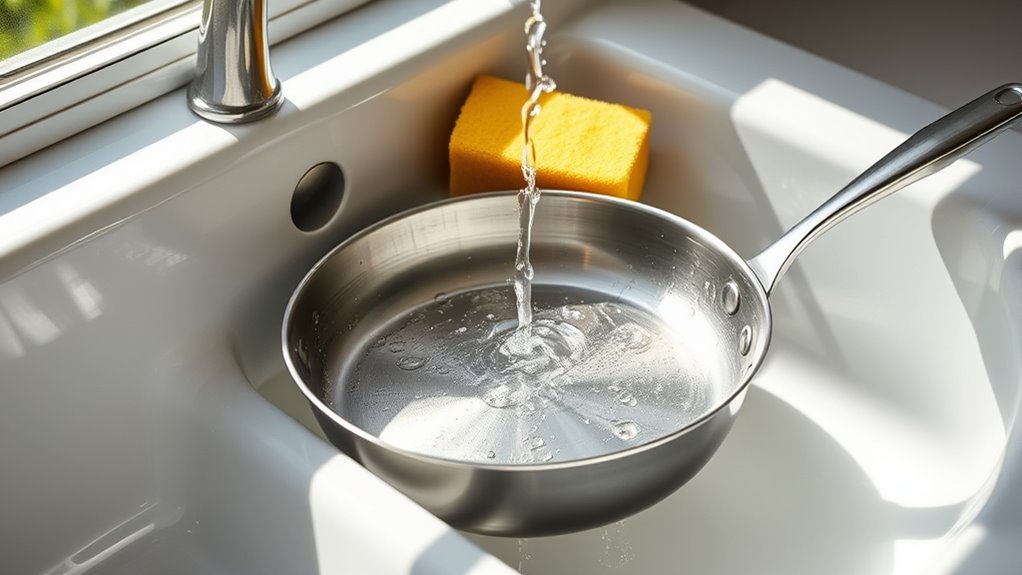
To keep your All Clad pan in top condition, start by removing any loose food particles from its surface. Use a paper towel or a soft spatula to gently scrape off food debris without causing damage. Avoid metal utensils or abrasive tools to prevent scratching the pan.
Next, rinse the pan with warm water to loosen stubborn particles, making removal easier. Carefully use a soft spatula or plastic scraper to clear any residual food debris, ensuring all loose particles are removed.
This step is essential to prevent food from baking onto the surface during further cleaning.
Address Burnt-On Food With Baking Soda Paste
If burnt-on food has stubbornly stuck to your All Clad pan, mixing baking soda with a little water into a thick paste can help lift the residue effectively. Here’s how to tackle that tough stain:
Mix baking soda and water until you get a thick paste. Apply the paste generously on burnt-on food and stained areas. Let it sit for 5 to 10 minutes to loosen the residue.
Gently scrub with a non-abrasive sponge or brush to avoid scratching. Rinse thoroughly with warm water and dry immediately to keep the pan shiny.
For tougher stains, reapply the baking soda paste and scrub again, or heat the pan slightly before cleaning. This method guarantees effective cleaning without damaging your pan.
Soak for Stubborn Residue Removal
When burnt-on food refuses to budge, soaking your All Clad pan in warm water mixed with baking soda for 15 to 30 minutes can loosen the stubborn residue and make cleaning much easier.
Always let the pan cool completely before you soak it to avoid warping the stainless steel.
Allow your All Clad pan to cool fully before soaking to prevent warping and preserve its quality.
For tougher stains, fill the pan with hot water and add a few tablespoons of vinegar, then let it sit to break down residue more effectively.
You can also submerge the entire pan or heavily stained sections in a baking soda and water mixture overnight for deeper cleaning.
After soaking, use a soft sponge or non-abrasive scrubber to gently lift the stubborn residue without scratching your pan’s surface.
This soak method simplifies maintaining your stainless steel cookware.
Clean Discoloration With Vinegar Solution
Although discoloration on your All Clad pan can be stubborn, you can effectively tackle it by simmering a solution of equal parts white vinegar and water. This gentle simmer helps break down discoloration and water spots on stainless steel surfaces, restoring your pan’s shine and maintaining cooking performance.
Here’s how to incorporate vinegar into your cleaning process:
- Fill the pan with equal parts white vinegar and water
- Bring the solution to a gentle simmer for 5 to 10 minutes
- Let the pan cool slightly, then wipe away residue with a soft cloth
- Repeat if discoloration persists or use undiluted white vinegar for spots
- Rinse thoroughly with warm water and dry immediately to avoid new spots
This method refreshes your pan without harsh scrubbing.
Scrub Gently With Nonabrasive Tools
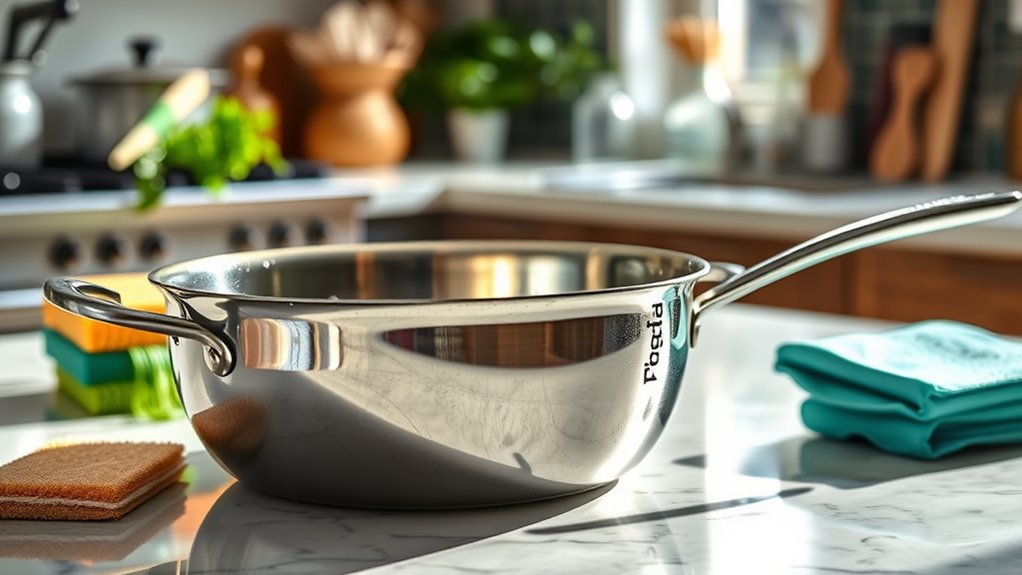
Since All Clad pans have delicate surfaces, you’ll want to use soft sponges or nonabrasive nylon or silicone scrubbers to clean them. Avoid steel wool or abrasive pads that can scratch the stainless steel finish.
When you scrub, use gentle circular motions to lift stuck-on food without damaging the pan. For tougher residue, make a paste of baking soda and water, then apply it with your nonabrasive sponge or cloth.
This method safely tackles stains without harsh chemicals or scrubbing tools.
Always keep your scrubbing gentle to preserve the pan’s surface and maintain its shine. By using nonabrasive tools and careful scrubbing techniques, you’ll extend the life of your All Clad pans while keeping them spotless and ready for your next meal.
Rinse Thoroughly to Eliminate Soap Residue
To keep your All Clad pans looking their best, you’ll want to rinse them thoroughly to remove all soap residue. Proper rinsing ensures no cleaning agents linger, preventing residue buildup that dulls your pan’s shine.
Thorough rinsing removes soap residue, preserving your All Clad pan’s shine and preventing dull buildup.
Use warm water to wash away soap effectively, focusing on every inch during the process. Here’s how to master rinsing:
Run warm water over the entire pan surface.
Target corners and crevices where soap hides.
Use your fingers or a soft cloth to help dislodge stubborn residue.
Visually inspect the pan for any leftover soap film.
Repeat rinsing if you notice streaks or slippery spots.
Thorough rinsing after cleaning keeps your pan spotless and maintains its gleaming finish without streaks or soap residue.
Dry Immediately to Prevent Water Spots
After rinsing your All Clad pans thoroughly, you’ll want to dry them right away to keep them spotless. Prompt drying prevents water spots caused by hard water minerals that can settle on stainless steel surfaces.
Use a soft, lint-free towel to gently remove all moisture from the pan, including handles and exterior areas.
This careful drying not only preserves the pan’s polished finish but also helps prevent corrosion over time. Leaving moisture on clad pans invites mineral deposits that dull their appearance, so tackling drying immediately is essential.
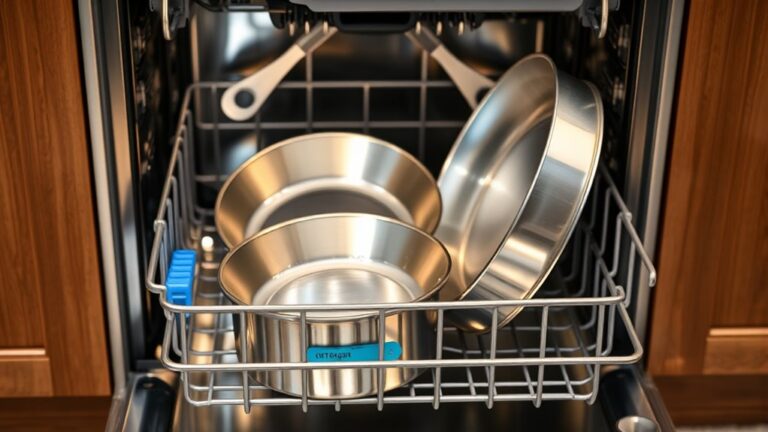
Store Properly to Maintain Pan Condition
Although cleaning your All Clad pans thoroughly is essential, how you store them plays an equally important role in maintaining their condition. Proper storage ensures moisture prevention and protects against corrosion, extending your pans’ lifespan.
After drying, follow these care tips for ideal storage:
Store pans in a cool, dry place to avoid moisture buildup. Use pan protectors or soft cloths between pans when stacking to prevent scratches. Avoid stacking heavy items directly on your pans to prevent warping.
Hang pans on hooks or racks for better air circulation and less surface contact. Regularly check for moisture or corrosion and address any issues quickly.
With mindful stacking and drying, your All Clad pans will stay in excellent shape for years.
Frequently Asked Questions
How to Properly Clean All-Clad Pans?
You should let your All-Clad pans cool, then wash with warm water, mild soap, and a soft sponge. For tough stains, scrub gently with baking soda paste.
Avoid abrasives, dry immediately, and polish for shine.
What Is the Lawsuit Against All-Clad?
The lawsuit claims All-Clad’s stainless steel pans discolor, stain, and peel prematurely, despite durability promises.
If you’ve experienced black spots or flaking, you’re part of the ongoing case seeking compensation or replacements.
What Is the Trick to Cleaning a Stainless Steel Pan?
You clean, you scrub, you shine—that’s the trick. Use gentle abrasives like baking soda, boil vinegar to lift stains, avoid harsh scrubbers, and dry immediately to keep your stainless steel pan gleaming without damage.
How to Clean Brown Spots off a Stainless Steel Pan?
You can clean brown spots by making a baking soda paste, applying it, and gently scrubbing. Boil equal parts water and vinegar in the pan to loosen stains.
Rinse well and dry to prevent new spots.
Conclusion
Think of your All Clad pan like a trusted friend—you wouldn’t rush them or treat them roughly. By gently cleaning and caring for your pan, you’re nurturing a bond that lasts through countless meals.
Just as a garden thrives with regular attention, your pan will shine brighter and perform better over time. So, treat it kindly, follow these steps, and enjoy the lasting friendship of a perfectly maintained cookware companion.
With proper cleaning and maintenance, your All Clad pans will remain durable, retain their beautiful finish, and provide excellent cooking performance for years to come.