Do Carote Pans Have Teflon Coating?
If you’re considering Carote pans, you might wonder whether they use Teflon coatings. Knowing what’s inside your cookware matters because it affects durability and safety. Carote often promotes ceramic or granite-like nonstick surfaces, which appeal to those seeking alternatives to traditional Teflon.
However, some Carote models might include hybrid layers that contain PTFE, the chemical behind Teflon coatings. Before you decide, it’s worth understanding how these coatings differ and what that means for your cooking experience and health. This knowledge can help you choose the right pan for your kitchen needs.
Understanding PTFE and Its Role in Cookware
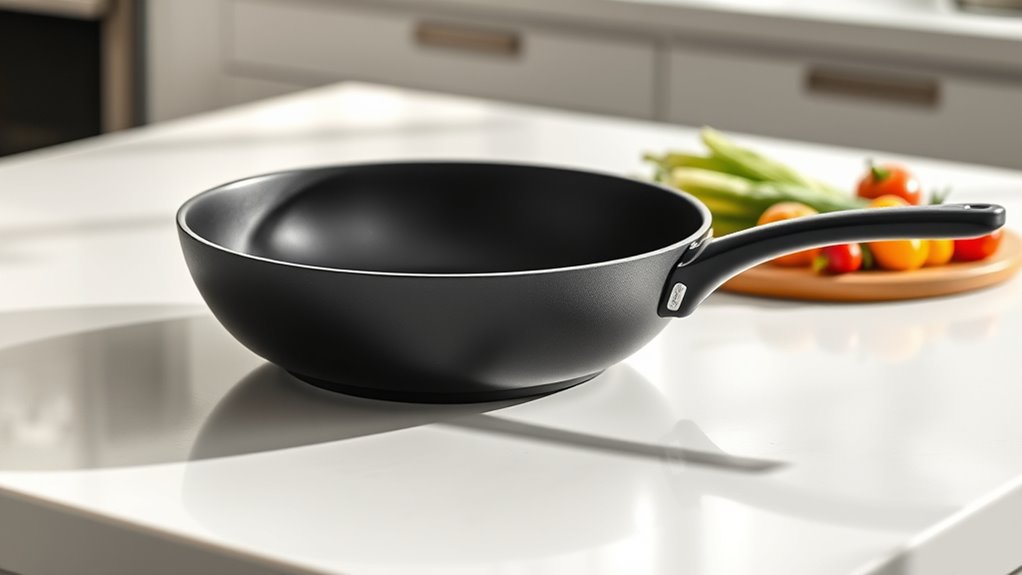
Although you might hear the term Teflon used broadly, it specifically refers to PTFE, a synthetic polymer that many cookware brands, including some Carote pans, use for their nonstick surfaces.
PTFE provides an effective nonstick coating that reduces food sticking and makes cleaning easier.
Many Carote pans feature PTFE-based coatings, but some also offer ceramic nonstick alternatives, which may or may not contain PTFE.
It’s vital to know that overheating PTFE coatings beyond about 250°C (480°F) can cause them to break down and release toxic fumes, posing health risks.
So, when using Carote pans or any cookware with PTFE, you’ll want to avoid overheating.
Understanding these cookware coatings helps you make safer, informed choices in the kitchen.
Composition of Carote Pan Nonstick Coating
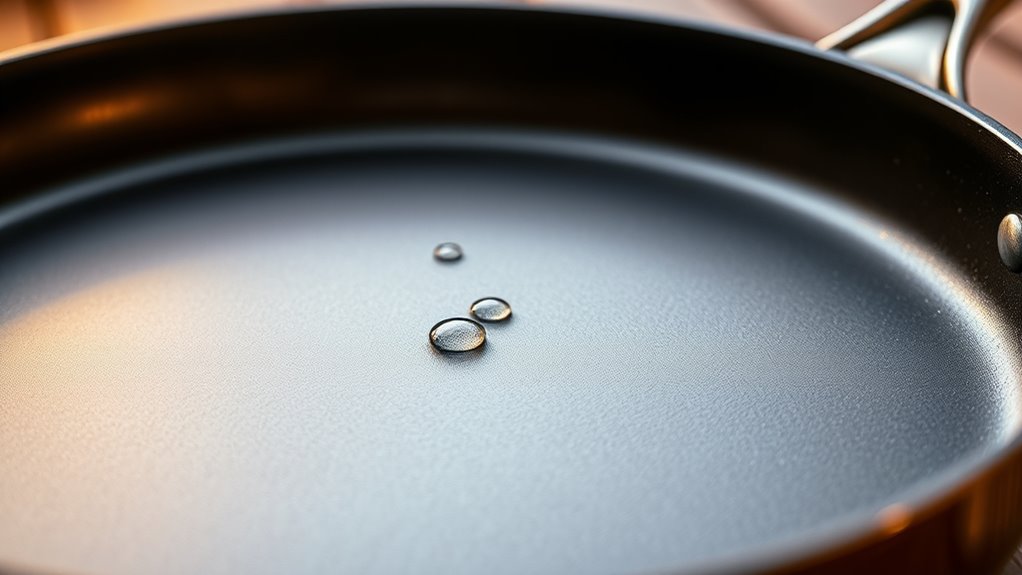
Knowing that Carote pans often use PTFE-based coatings helps set the stage for understanding their exact composition. Carote cookware typically features a ceramic nonstick layer, which is often marketed as granite nonstick or granistone.
This nonstick coating combines a durable ceramic or glass-based layer with PTFE, creating a hybrid that’s PFOA-free. While it’s not pure Teflon, the PTFE component lends excellent nonstick properties.
The nonstick layer is designed to resist sticking and promote easy cleaning, but you should avoid using metal utensils, as they can damage the coating over time.
Many Carote pans source their coatings from manufacturers like ILAG, known for producing Teflon-derived, PFOA-free nonstick surfaces.
This blend makes Carote’s nonstick coating unique and effective for everyday cooking.
Safety Considerations of Teflon-Based Coatings
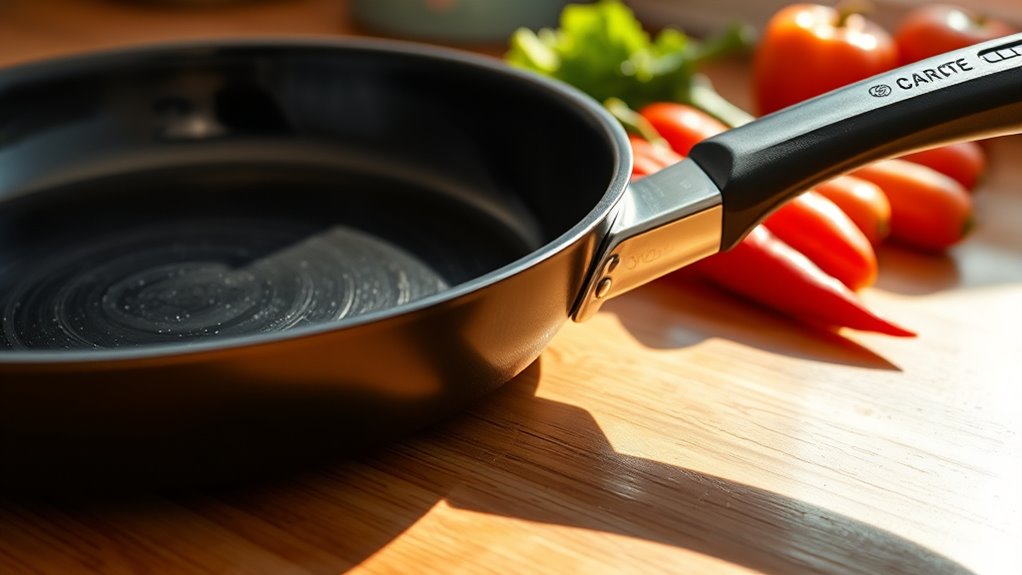
When you use Teflon-based coatings, it’s important to be aware of their safety aspects to avoid potential health risks. Modern Teflon nonstick coatings are typically PFOA-free, which lowers chemical concerns.
However, overheating above 250°C can release toxic fumes, so you should avoid high heat. Scratches from metal utensils can degrade the coating, potentially exposing you to harmful particles.
Regulatory safety standards from agencies like the FDA confirm that Teflon cookware is safe when used properly.
| Safety Aspect | Details |
|---|---|
| Material | PTFE-based Teflon |
| Heat Limit | Below 250°C to prevent fumes |
| Chemical Safety | Modern coatings are PFOA-free |
| Wear & Tear | Scratches degrade coating |
| Regulatory Safety | Approved by FDA and EU standards |
User Experience With Carote Cookware Over Time
Understanding the safety aspects of Teflon coatings helps set expectations for how Carote pans perform over time. You’ll notice that Carote pans offer excellent food release initially due to their nonstick ceramic coating.
However, with regular use, especially if you use metal utensils or cook at high heat, the coating can show signs of wear and degradation. Many users report that after about six months, the nonstick performance diminishes, and some experience visible coating degradation or flaking.
While some folks enjoy longer-lasting performance, the consensus suggests the nonstick quality won’t last indefinitely. You might find yourself needing to replace the pans within one to two years to maintain consistent food release.
Best Practices for Maintaining Carote Pans
Although Carote pans come with durable ceramic coatings, you’ll want to take specific steps to keep them performing well. When using cookware, always cook at low to medium temperatures to preserve the ceramic nonstick surface and avoid damage.
To prevent scratching the nonstick coating, use wooden or silicone utensils only.
Hand wash your Carote pans with warm, soapy water and a soft sponge; this method helps maintain the nonstick properties longer than dishwashers or abrasive cleaners.
Avoid cooking sprays, which can degrade the ceramic nonstick layer over time.
Regularly inspect for damage or scratches, as these can reduce the pan’s effectiveness. If you notice significant wear or loss of nonstick properties, it’s time to replace your Carote pan to guarantee ideal cooking results.
Frequently Asked Questions
Does Carote Have Teflon in It?
No, Carote pans don’t have Teflon in their coatings. You’ll find ceramic or mineral-based non-stick surfaces instead, so you can cook without worrying about traditional PTFE or Teflon chemicals in your cookware.
Are Carote Pans Non-Toxic?
Yes, Carote pans are non-toxic. You’ll appreciate their ceramic coating free from harmful chemicals like PFOA and lead.
They meet strict safety standards, ensuring your cooking stays safe and chemical-free every time you use them.
How to Tell if a Pan Is Coated With Teflon?
Run your fingers over the smooth, glossy surface—if it feels slick and shiny like a glassy pond, check for “Teflon” labels or test with metal utensils; scratches or peeling usually mean it’s Teflon-coated.
What Material Is Carote Cookware Made Of?
Carote cookware is made of aluminum with a ceramic nonstick coating. You’ll get even heat distribution and a durable, eco-friendly surface free from Teflon, PFOA, or toxic chemicals, ensuring safe, healthy cooking every time.
Conclusion
When choosing Carote pans, remember that not all have Teflon coatings—many use ceramic, which is PFOA-free and safer at high heat. It’s best to check your specific model to know exactly what you’re getting.
Like the saying goes, “Don’t judge a book by its cover.” Understanding your pan’s coating helps you cook confidently and maintain it properly for lasting performance and safety.
Knowing whether your Carote pans have Teflon coating or ceramic surfaces is key to making the most of your cookware. This awareness ensures you enjoy the benefits of non-stick cooking while prioritizing your health and the longevity of your pans.